
Ammar ibn Yasir: The Man Whose Bones Were Filled with Faith
In the annals of Islam, few names evoke as much raw emotion and respect as Ammar ibn Yasir. He was not a man of noble tribal standing or immense wealth; rather, he was the son of a Yemeni immigrant and a former slave woman. Yet, in the eyes of the Prophet and the Divine, he was a giant; a man whose very name became synonymous with the “Scale of Truth.”
Ammar’s story begins with a journey of love and loyalty. His father, Yasir ibn Amir, had travelled from Yemen to Makkah searching for a lost brother. He stayed, found protection with the Banu Makhzum tribe, and married Sumayyah bint Khayyat. From this humble union came Ammar.
When the light of Islam first dawned in Makkah, the House of Yasir did not hesitate. Ammar was among the first thirty or so people to enter the House of Al-Arqam and pledge his soul to Allah. He brought the message home, and soon, his father, mother, and brother Abdullah all embraced the faith.
Because they had no tribal “asabiyyah” (clannish protection) to shield them, the Banu Makhzum led by the infamous Abu Jahl singled them out for the most barbaric torture. They were taken to the scorching sands of Al-Abta’ and pressed under red-hot stones.
It was during these moments that the Prophet would pass by them. Heartbroken that he could not yet physically intervene, he offered them the greatest consolation a believer could receive:
“Patience, O family of Yasir, for your appointment is in Paradise.”
Ammar witnessed the unthinkable: the martyrdom of his mother, Sumayyah, the first martyr of Islam, murdered by the spear of Abu Jahl, followed shortly by the death of his father under the weight of persecution.
The First Architect of a Mosque
After enduring years of trials, Ammar made his way to Madinah. His love for the Prophet was so profound that even before the Messenger reached the heart of the city, Ammar wanted to ensure he had a place of dignity.
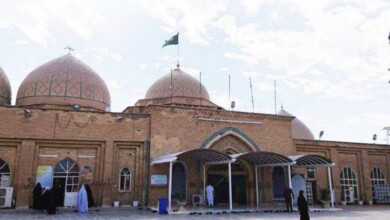
While others were settling in, Ammar began gathering stones. He is credited by many historians as being the one who initiated the building of the Quba Mosque, the first mosque in Islamic history.
He was a man of action; while others carried one brick at a time during the construction of the Prophet’s Mosque (Al-Masjid an-Nabawi), Ammar carried two; one for himself and one for the Prophet.
Seeing him covered in dust and labouring, the Prophet wiped the sweat from Ammar’s face and famously remarked: “Ammar is filled with faith up to his bones.”
A Witness to Truth
Ammar was a “Badri”, a veteran of the Battle of Badr, and he stood by the Prophet’s side in every subsequent struggle. He was a moral compass. The Sahaba used to say that if they ever found themselves confused during a time of Fitna (strife), they would look to see which side Ammar was on, for the Prophet had told them that Ammar would always be with the truth.
Even after the passing of the Prophet, Ammar’s zeal never flickered. During the Wars of Apostasy under Abu Bakr as-Siddiq, Ammar fought at the Battle of Yamama. Even when his ear was severed and hung by a thread, he continued to charge into the ranks, rallying the Muslims with a voice that didn’t know the meaning of retreat.
The Governor of Kufa
Under the Caliphate of Umar ibn al-Khattab, Ammar was appointed the governor of Kufa. Umar, the great “Farooq” who could read men’s souls, wrote to the people of Kufa:
“I have sent you Ammar ibn Yasir as a leader and Ibn Mas’ud as a teacher. They are two of the most distinguished companions of Muhammad. Follow them and listen to them.”
Ammar lived a life of extreme simplicity even as a governor, often seen buying poultry in the market and carrying it home on his own shoulders, refusing the pomposity of leadership.
The Final Sacrifice: Siffin
The Prophet had once prophesied to Ammar: “The transgressing party will kill you.” This prophecy weighed heavily on the Ummah during the civil strife between Ali ibn Abi Talib and Muawiya. Ammar, by then a venerable elder of 93 years, did not choose the path of “neutrality.” He saw it as his religious duty to support the Caliph Ali.
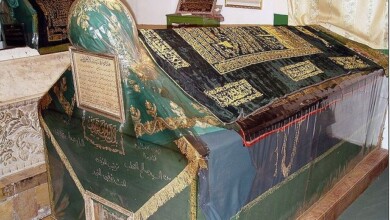
In the year 37 AH, at the Battle of Siffin, the elderly warrior took his final drink, a cup of milk, and smiled, saying, “Today I meet my loved ones, Muhammad and his party.” He fought with the strength of a young man until he fell as a martyr.