
Back to school, back to hunger: why school feeding is a public health issue
By Ismail Asiimwe
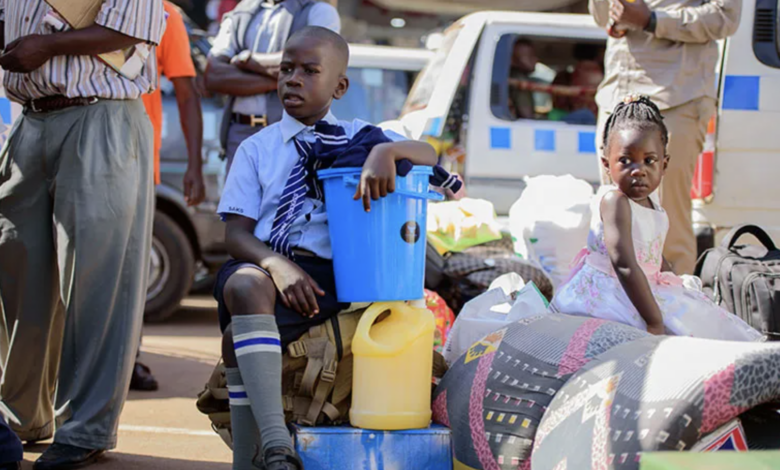
Currently, school gates across Uganda have reopened following the December festivities that precede the election period, a time that often strains household budgets and attention. For many parents and guardians, the reopening week primarily involves logistics: paying fees, purchasing uniforms, replacing lost items, arranging transportation, and meeting reporting deadlines. These are the visible pressures commonly discussed.
However, one often unspoken yet crucial aspect of a child’s education is nutrition: what the child will eat, whether in a boarding or day school, what that meal actually consists of, and whether it provides sufficient nourishment to sustain attention, growth, and health. This is where the conversation shifts from ideals to realities. Ultimately, the quality of the “school diet” is shaped more by available resources than by preferences. The choices families and schools make, such as packed food, canteen purchases, or a school meal plan, are driven by what households can afford and what schools can reliably provide.
This constraint is widespread, not just in rural areas. 42% of Uganda’s 49.5 million people experience multidimensional poverty. Data shows that deprivation is far greater in rural communities than in urban ones. This means that the majority of households face tough choices due to resource scarcity, including food choices. When families live this close to the edge, back-to-school quickly becomes back to impossible choices between transport and lunch, rent and protein, tuition top-ups and a balanced meal.
This is why school nutrition matters. A World Bank report estimates that in Uganda, a child who starts school at age four can expect to complete about 6.8 years of schooling by age 18. That means much of childhood and adolescence, the critical years of growth, are spent in and around school. If school-time diets are poor, we are effectively normalizing malnutrition during the very phase when bodies and minds should be building strong foundations.
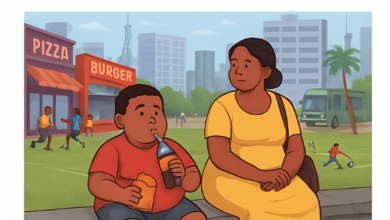
And the problem is bigger than hunger pains. A national strategy document on social protection in Uganda links poor school outcomes to the absence of a midday meal. It highlights that micronutrient deficiencies are common, reporting anemia rates reaching 46% among girls aged 11–14 and notable malnutrition among children aged 5–19. These are not “small nutrition issues.” They shape energy levels, immunity, attention, confidence, and long-term well-being. They also shape lifestyle: underfed children may compensate with cheap, ultra-processed snacks; those with poor diets often struggle with fatigue that reduces play and physical activity; and sickness-related absenteeism becomes routine.
What makes this situation especially frustrating is that Uganda is not short on policy intent. The country has long had frameworks that recognize food and nutrition as essential to health and development, including the 2003 Uganda Food and Nutrition Policy.
More recently, Uganda has strengthened national planning around nutrition action. Uganda also joined the Global School Meals Coalition in November 2023, signaling political attention toward school meals as a national priority. But commitment without sustained financing becomes a public promise that families still pay for privately.
This is where the “lifestyle and wellbeing” conversation must get serious. We cannot keep telling parents to “feed children better” while the economy forces many to choose between basics. We also cannot keep leaving school feeding to individual headteachers, school owners, and parents alone, especially when poverty is multidimensional and widespread.
What practical steps can be taken immediately? First, national education planning must recognize school meals as essential infrastructure, not optional. A robust national school feeding program should be viewed as a social protection tool that significantly enhances education and health outcomes, provided it is accompanied by predictable funding and accountability.
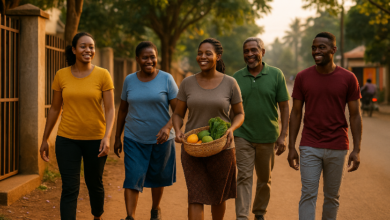
Second, schools can serve as centers for nutrition education through simple routines, access to clean water, handwashing, basic food knowledge, and, where possible, school gardens, helping children and parents see that well-being is cultivated daily, not just once a year. Third, parental involvement remains crucial: establishing healthy breakfast routines, packing nutritious foods, and teaching children to value local, wholesome foods while avoiding sugary snacks.
Parents need support, not blame. To ensure children are ready to learn and live well upon returning to school, we must prioritize ending hunger and creating the healthiest education system, one where no child studies hungry.
—
The writer is a Doctoral Candidate in Kinesiology at the University of Georgia, Athens, and a lecturer of Sports and Exercise Science at Gulu University. Readers can share feedback via asiimweismail@gmail.com.