
Eid al-Fitr: Why Muslims must pay zakat before prayers
By Abdul Wahid Kakandea
Today Muslims all over the world are celebrating the Eid al-Fitr festival marking an end to the fasting of the holy month of Ramadhan.
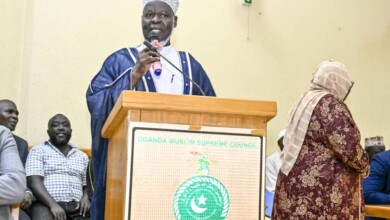
Sheikh Muhammad Ali Waiswa, the First Deputy Mufti of Uganda argues that payment of Zakat al-Fitr is mandatory before the Eid prayers to purify Muslims from the flaws during fasting.
“I appeal to all Muslims to pay Zakat al-Fitr before performing prayers because it is mandatory to every Muslim including the young ones,” Sheikh Waiswa said.
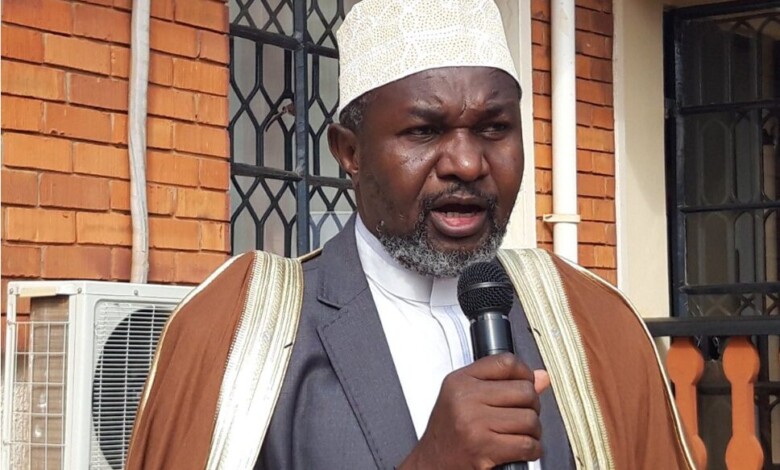
Dr Abdul Hafiz Walusimbi, the Director of sharia and legal affairs in the Office of the Supreme Mufti based at Kibuli explained that Zakat al-Fitr is purposely designed to feed the poor and the needy to equally share the joy of Idd al-Fitr.
He said Zakat al-Fitr is primarily payable in staple food items such as rice, Matooke, Maize flour, wheat or dates among others.
ZAKAT AL-FITR EXPLAINED
Zakat al-Fitr acts as a spiritual purification for those who have fasted during Ramadhan.
Unlike annual Zakat al-mali which applies only to those meeting a wealth threshold, Zakat al-Fitr is almost universal.
Every Muslim man, woman, adult or child is obliged to pay it provided the household has surplus food for the day and night of Eid.
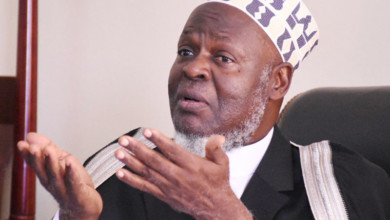
According to Dr Muhammad Musoke Kiggundu, the Director of communications and research in the Office of the Supreme Mufti, giving Zakat al-Fitr is an act that combines personal piety with social compassion, turning individual devotion into collective welfare.
Religious scholars note that timely fulfillment of Zakat al-Fitr benefits both giver and recipient.
It ensures that fasting is spiritually complete, while also meeting the immediate needs of the less fortunate.
By distributing this charity, Muslims uphold the ethical values of generosity, solidarity and empathy core lessons of Ramadhan.
“CELEBRATE ISLAMICALLY”
In his Eid al-Fitr message, Sheikh Muhammad Yunus Kamoga, the Amir Ummah (leader) of the Tabligh Muslim Community urged Muslims to show up in big numbers for the prayers.
“We are required to observe this prayer in an open space. Therefore, as the Tabligh, our main prayers shall be performed at Nakivubo Blue Primary School,” Kamoga said.
To uphold their fasting, Kamoga appealed to the Muslims to celebrate the day in line with the Islamic teachings.
“I know that Eid is about celebration and joy, but you should do it in line with the Islamic teachings to avoid spoiling your fasting,” Kamoga said.
Both at Gadaffi national mosque in Old Kampala and Kibuli, the Idd al-Fitr prayers will be performed at exactly 9:00am while Tabligh muslim sect will hold its prayers at 8:30am.
Kabaka hails muslims
Meanwhile, the Kabaka of Buganda Ronald Muwenda Mutebi II has also congratulated the Muslim community upon completion of the fasting of the holy month of Ramadhan.
He applauded the Muslim community for their devotion, highlighting that fasting promotes peace, unity and spiritual growth while calling for continued good deeds.
He urged continued commitment to worship and moral integrity, stressing the importance of charity, service and generosity as pillars that strengthen both individuals and the nation.
“The act of fasting is not only a spiritual discipline but also strengthens our communities. We urge our people to embrace the principles of kindness, generosity and selflessness, which benefit both individuals and our beloved nation,” the Kabaka wrote.
Acknowledging reports of unrest in parts of the country in the aftermath of the recently concluded general elections particularly in Buganda, the Kabaka appealed for peace, unity and dialogue.
The Kabaka also called for responsible use of social media platforms such as TikTok by ensuring that only truthful information that promote positive societal values including religious education, cultural heritage, literacy, health and civic responsibility are shared.