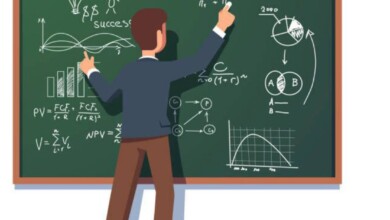

How modern education lost its soul to economics (III)
By Yusuf Bulafu
Continued …
THE COMPREHENSIVE GOAL
To counteract the corrosive effects of the economic utility trap, we must fundamentally recalibrate our understanding of what education is for. The only legitimate and enduring metric for a successful education is the comprehensive development of the individual and society; its main goal must always be growth.
This is not growth in the narrow economic sense of accumulating capital, but growth in the philosophical sense, the unfolding of potential. Where the current model views education as a transaction; trading time and tuition for a credential, a growth-oriented model views education as a transformation.
It is the process of shaping a human being who is not only capable of labour but is also capable of reason, reflection, and resilience. This approach posits that a student is not a vessel to be filled with facts for an exam, but a fire to be kindled for a lifetime of inquiry.
The first pillar of this comprehensive goal is Intellectual Growth, which transcends the mere memorization of data. In an era defined by information overload, deepfakes, and algorithmic biases, the ability to recall facts is far less valuable than the ability to evaluate them.
True intellectual growth equips a student with the tools of critical analysis, logical reasoning, and healthy scepticism. It teaches them how to think, not what to think. This form of education creates a mental agility that allows individuals to navigate complexity, detect nuance, and resist the comforting simplicity of rigid ideologies and blind conformity.
When we prioritize this depth of understanding over standardized scores, we cultivate minds that are curious, preparing students to solve problems that do not yet exist using technologies that have not yet been invented.
History offers a precedent for the idea that intellectual depth begets societal flourishing, most visibly in the foundations of the Islamic Golden Age. It is no coincidence that the very first revelation delivered to the Prophet Muhammad was the command “Iqra” (meaning “Read“). This foundational moment established centuries of a worldwide civilization rooted in the divine imperative to seek knowledge.
In this worldview, the study of the physical universe; from medicine to astronomy, was not seen as a secular distraction but as an act of spiritual devotion. This intrinsic value placed on learning fuelled an era of unparalleled innovation, gifting the world with algebra, advanced optics, and surgical breakthroughs.
The legacy of this era stands as a powerful testament to our central argument: when a society elevates education to a moral duty rather than reducing it to an economic utility, it achieves a level of prosperity and growth that money alone cannot buy.
Equally important, yet often neglected in the rush for employability, is Personal and Moral Growth. The classroom must be a crucible for character formation, a space where students grapple with the eternal questions of identity, ethics, and purpose. Education should provide the vocabulary to understand one’s own internal landscape, harboring emotional intelligence, empathy, and resilience.
In a growth-focused system, failure is not a mark of shame to be avoided at all costs, but a necessary step in the learning process that builds grit. By engaging with literature, philosophy, and the arts, students learn to inhabit the perspectives of others, breaking down the silos of self-interest.
This internal development is the bedrock of a fulfilling life; it ensures that when a student eventually achieves professional success, they possess the integrity and awareness to wield that success wisely.
To be continued …