
Leaving what hurt, carrying what healed

By Hatmah Nalugwa Ssekaaya.
Assalaam alaykum wa rahmatullahi wa barakaatuh
A new year has a quiet way of asking difficult questions. Not loudly. Not aggressively. But softly — in moments of stillness. In pauses between salah. In the silence after an argument that never truly ended. It asks, ‘What are you still carrying that no longer serves you?’
Recently, I found myself thinking about how easily we carry emotional weight into new seasons. How often we say, “It is okay,” when it actually isn’t, and how many times we move on without truly healing. I realised that many of us enter a New Year hopeful, yet emotionally tired. Smiling, yet still bruised in places no one sees.
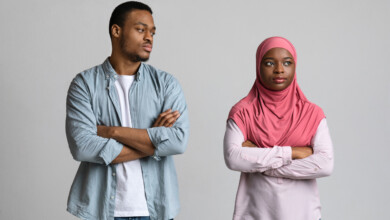
Marriage, in particular, has a way of revealing the places where we have not yet let go. Many couples step into a new year holding hands, yet their hearts are weighed down by old hurts—words spoken in anger, promises forgotten, apologies never fully offered. There are moments that passed without closure, but not without consequence. Time moved on, but healing did not.
And so the calendar changed, but the heart did not.
Islam teaches us that time itself is a witness. Allah swears by it in the Qur’an. Time moves forward by His decree— but whether we move forward within it is a choice. Especially in marriage.
The new year presents a gentle invitation: let go of what has caused you pain. Embrace what has empowered you.
This does not mean pretending pain never existed. Islam does not demand emotional dishonesty. Even Prophet Yakub (AS) cried until his eyes went white with grief — and Allah recorded his sorrow with honour. Pain acknowledged is not weakness. Pain denied often becomes poison.
But there is a difference between acknowledging hurt and living inside it. Some spouses memorise the worst version of each other. They replay failures more fluently than successes. They protect themselves with emotional distance, calling it wisdom — when in truth, it is an unresolved hurt disguised as caution.
Yet Allah calls us to something higher.
Forgiveness in marriage is not forgetting what happened. It is deciding that the past will no longer control the future. It is choosing peace over punishment. Growth over grudges. Mercy over memory.
This is not easy work. It requires humility — especially when we believe we were right. It requires courage — especially when we fear being hurt again. But Allah never asks us to forgive alone. He promises to be present in the struggle.
I have learnt — and continue to learn — that healing in marriage often begins when someone is brave enough to soften first. Not because the other was flawless, but because the heart grows heavy when it refuses to bend.
The Prophet (PBUH) taught us that Allah increases a servant in honour when they forgive. Imagine then the unseen honour written for a spouse who forgives for Allah’s sake — not because the other was perfect, but because Allah loves mercy.
As the year unfolds, it may be time to ask: What am I dragging into this marriage that Allah is asking me to release?
Is it an argument that ended without resolution? A season of emotional absence? A comparison that bred resentment? A mistake that has already been repented for — but never truly forgiven?
Holding onto pain may feel like self-protection, but often it is self-sabotage. It hardens the heart. It dims affection. It creates distance where closeness once lived.
Healing, on the other hand, does not erase memory — it reframes it. It allows lessons to remain without allowing bitterness to rule. It keeps wisdom while releasing weight.
Some couples heal by talking. Others heal by praying. Some heal through time and consistency. Others heal through a sincere apology finally offered — or finally accepted. There is no single path to healing, but there is one essential ingredient: intention.
Healing does not happen accidentally. It happens when someone chooses to stop reopening the wound and starts tending to it instead. And sometimes, healing begins with this quiet Du’a: “Ya Allah, help me release what You did not intend for me to carry.”
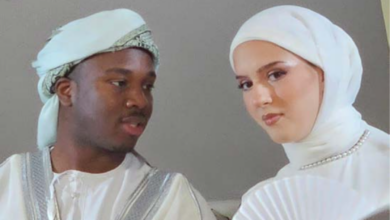
Marriage thrives when hearts are light. When laughter is not restrained by resentment. When kindness is not rationed because of yesterday’s disappointment. When spouses allow themselves to believe — again — in goodness.
The New Year does not need perfect marriages. It needs willing hearts. Hearts willing to say: Let us not punish each other forever for moments Allah has already forgiven. Hearts willing to grow wiser, not colder. Hearts willing to heal — not because the pain was small, but because Allah is greater.
As you walk deeper into this year, carry forward what healed you: the patience you learnt, the boundaries that brought peace, the communication that improved, and the faith that deepened.
And gently — deliberately — leave behind what hurt you. Not as an act of denial. But as an act of trust in Allah’s ability to restore what was once broken.
A healing Du’a for the New Year
“May Allah heal the wounds we carried silently. May He remove resentment from our hearts and replace it with mercy. May He teach us when to speak and when to let go. May He grant us the strength to forgive — and the wisdom to grow. May this year be lighter than the last, kinder than the last, and closer to Him than ever before.” Ameen.