

Mu’awiya I: The architect of the Empire
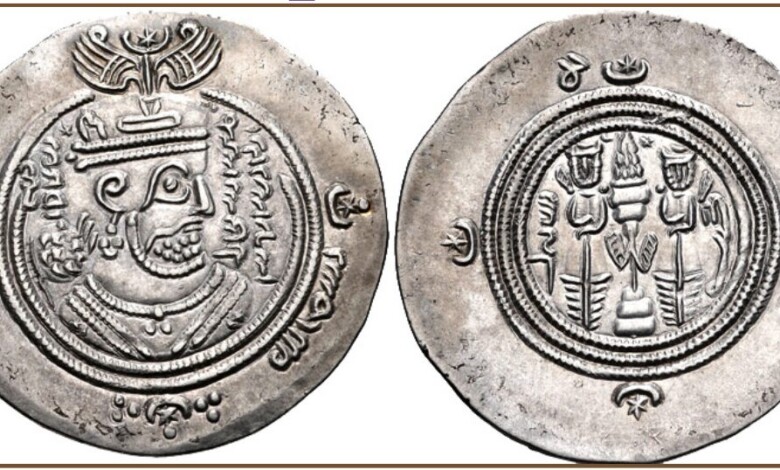
Mu’awiya ibn Abi Sufyan (r. 661–680 CE) is often remembered through the lens of the civil wars that brought him to power. However, to view him only as a seeker of the Caliphate is to miss the man who essentially invented Islamic statecraft. He inherited a fractured community and left behind a world power.
Long before he sat on the throne in Damascus, Mu’awiya was a man of the pen. As a scribe for the Prophet Muhammad, he was part of the inner circle that managed the early community’s most sensitive records. This early exposure to documentation and administration became his hallmark.
When he was appointed Governor of Syria by Caliph Uthman (RA), he didn’t just maintain the status quo. He realized that for the Muslim state to survive against the Byzantine Empire, it needed more than desert cavalry.
He built the first Muslim Navy, a fleet of 1,700 ships that eventually defeated the Byzantines at the Battle of the Masts (655 CE). This was a turning point in history that showed that the Mediterranean was no longer a ‘Roman Lake.’
In the 650s, the Arab Caliphate had achieved stunning conquests on land, absorbing the Sasanian Empire and taking key Byzantine territories like Syria and Egypt. The governor of Syria, Mu’awiya, recognized the need to challenge Byzantine control of the sea to protect these new coasts and continue expansion. His ultimate goal was likely a campaign against Constantinople itself.
To build this navy, Mu’awiya collaborated with Abd Allah ibn Sa’d, the governor of Egypt. Ibn Sa’d proved to be a skilled naval commander, constructing a strong fleet at the shipyards in Alexandria. By 655, this new Muslim navy, crewed by both Egyptians and Arabs, was ready to sail. Their departure from the port of Acre set the stage for a monumental clash with the Romans.
The philosophy of Hilm
Mu’awiya was famous for a leadership style he called Hilm, a combination of forbearance, shrewdness, and strategic patience. He famously said:
“I do not use my sword when my whip will do, and I do not use my whip when my tongue will do. If there be but a single hair stretching between me and my people, I will not let it break.”
This was his governing policy. He bought off his enemies when possible and used force only as a last resort.
This pragmatism allowed him to bridge the gap between the tribal traditions of Arabia and the sophisticated administrative needs of a Greco-Roman and Persian-influenced landscape.
The administrative revolution
While the Rashidun era was defined by spiritual leadership, Mu’awiya’s era was defined by professionalism. He realized that a sprawling empire across three continents could not be governed by handshakes alone.
- By moving the capital to Damascus, he placed the government in a region with centuries of administrative experience.
- He created the Barid, a system of horse-messengers that allowed him to receive news from the frontiers within days. It doubled as an intelligence network, keeping the Caliph informed of local governors’ actions.
- He was one of the first to keep existing Greek and Persian bureaucrats in their posts, ensuring that tax collection and civil services didn’t collapse during the transition of power.
The succession crisis and legacy
The most enduring controversy of Mu’awiya’s reign was his decision to appoint his son, Yazid, as his successor. In the eyes of his contemporaries, this was the moment the Khilafa (Caliphate) became Mulk (Kingship).
Mu’awiya’s rationale was stability. He feared that upon his death, the Ummah would slide back into the bloody chaos of the First Fitna. He believed a clear, hereditary line of succession, though a departure from the elective Shura, was the only way to prevent the empire from tearing itself apart.
Death and historical footprint
Mu’awiya died in 680 CE in Damascus, having ruled for nearly two decades as Caliph and two decades as Governor. He left a state that was financially solvent, militarily unmatched, and administratively unified.
While history remains divided on his religious standing and the transition to dynastic rule, his impact is undeniable. He took a movement and turned it into a civilization. Without the administrative bedrock laid by Mu’awiya, the later heights of the Umayyad and Abbasid eras might never have been reached.