
Mubaje raises concern over neglect of Zakah
By Ahmed Idriss
The Mufti of Uganda Sheikh Shaban Ramadhan Mubaje has raised concern over the neglect of zakah—one of the five pillars of Islam—warning that many Muslims who have attained the capacity to give annual alms are either unaware of the obligation or have failed to fulfil it.
Mubaje implored Muslim clerics to intensify teachings on Zakah, stressing that wealthy Muslims are ordained by Almighty Allah to support the less privileged and vulnerable members of the community by giving a small percentage of their wealth annually.
He noted that Allah made zakah one of the five pillars upon which the Islamic creed is built.
“Muslim clerics have done a great deal of preaching on other pillars such as Islamic monotheism—the belief in the oneness of the Creator, Allah—observation of the five obligatory daily prayers, fasting of the holy month of Ramadhan, and performance of pilgrimage to the Holy City of Makkah for those who can afford. Unfortunately, the teaching on zakah, its offering and distribution, has largely been neglected,” Mubaje noted.
“This has led to a situation where the majority of the faithful are not aware, yet some of them have gained the capacity to offer it.”
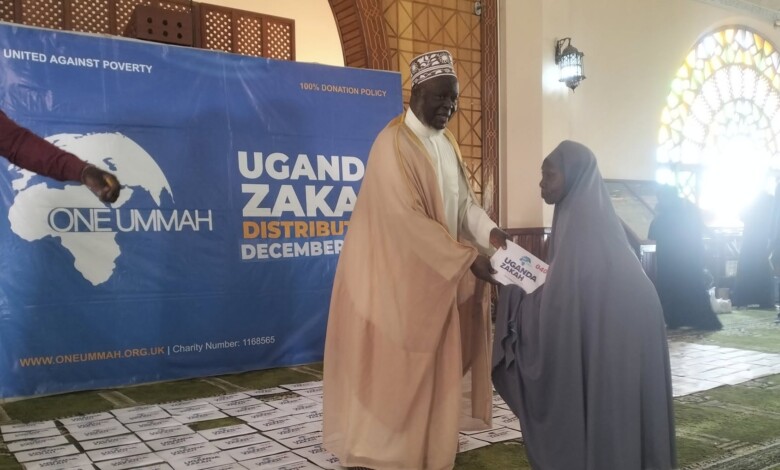
The Mufti made the remarks on Tuesday December 16, 2025, during a function organised by One UMMAH, a Muslim-based charitable organisation headed by Hajjat Shania Kigozi
He further cited examples of wealthy merchants operating successful large business ventures in Kampala who hardly offer zakah.
The Mufti preached that whoever gives zakah to the poor attracts and multiplies Allah’s divine blessings upon their wealth, while at the same time dispelling poverty.
“So let the rich know that the best way to protect their wealth is to offer zakah promptly,” he guided.
Addressing the 200 selected beneficiaries—comprising men, women, and children from different areas—the Mufti urged them not to consume the funds on food upon returning home, but instead to use them as seed capital to initiate household income-generating ventures such as growing cash crops.
“God gave us this land with fertile soils and a good climate for our sustenance. Unfortunately, the majority of citizens have done very little in agriculture. They keep lamenting about poverty,” he remarked.