
Muslim urged to embrace unity
By Ahmed Idriss
Hamza Ssekalema, lecturer at Islamic university in Uganda-IUIU has urged Muslims to appreciate the unique unity of Islam across the world, saying the sameness of belief, worship and ritual practice remains one of the faith’s greatest strengths.
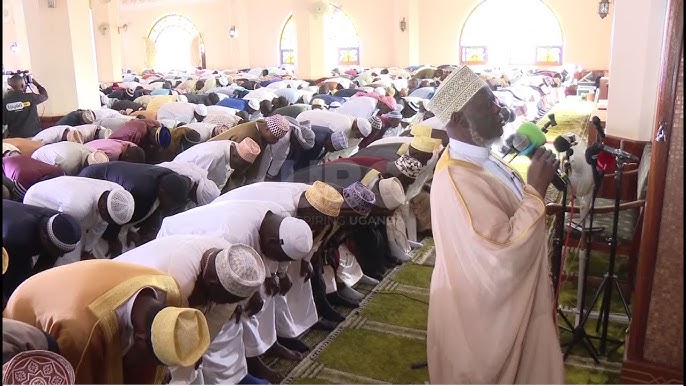
Delivering a sermon at the IUIU main mosque on Friday January 30th, 2026, Ssekalama told congregants that wherever a Muslim travels, the experience of worship remains unchanged.
“You will appreciate that everywhere you go, you will find Muslims doing exactly the same thing,” he said, noting that a Muslim can walk into any mosque globally and immediately join prayer without confusion.
He contrasted Islam with other religious and social systems, which he said often change from place to place and are frequently affected by disputes, development differences and shifting structures. In Islam, he said, Swalla (prayer) and core beliefs remain uniform.
“But for us, the Swalla is 100% the same. Even what we believe in… it is also the same across,” Ssekalama said.
Unity Built Through Sacrifice
Ssekalama stressed that this unity did not come automatically but was achieved through the sacrifices and discipline of early Muslims who preserved the faith with precision and commitment.
He reminded worshippers that the foundation of Islamic belief; the oneness of Allah, has remained unchanged since the message of Islam was revealed, and continues to be upheld without comparison to any other faith.
“We maintain the same strong faith that the first Kalima is the only one and is not compared with any other faith,” he said.
Lessons from the Death of the Prophet (PBUH)
Reflecting on Islamic history, Ssekalama recounted the confusion that followed the death of Prophet Muhammad (peace be upon him), describing it as a moment of great shock, even among prominent companions (Sahaba).
He said it was Abu Bakr As-Siddiq who restored clarity by reminding Muslims that while the Prophet had passed on, Allah remains eternal.
“For those of you that were worshipping Muhammad, he has died. But for those who were worshipping Allah, Allah is alive, and He never dies,” he quoted.
Ssekalama explained that this moment set a precedent for obedience to principle rather than personalities — a lesson he said remains relevant today.
Preserving the Quran and Sunnah
The sermon also revisited the meticulous process through which the Quran was compiled after the Prophet’s death, noting that verses had initially been written and memorised by different companions.
He said Muslim scholars adopted strict methods to ensure accuracy, requiring both written evidence and memorisation from multiple companions before any verse was accepted.
“These are efforts that we need to respect,” he told congregants.
Ssekalama further highlighted the rigorous science of Hadith authentication, explaining how scholars scrutinised both the narrators and the content of prophetic traditions to guard against falsehood.
He cited the work of great scholars such as Imam Bukhari, whose methods included examining the character and integrity of narrators, sometimes rejecting narrations over actions that suggested dishonesty.
In concluding, Ssekalama reminded Muslims that the Quran and Sunnah were preserved not for historical pride, but as guidance for future generations.
“These were not written as a job,” he said. “They were written as a guide for those that could come later.”
He called on Muslims to remain united, respect the scholarly efforts that preserved Islam, and live as brothers and sisters within society, anchored in authentic knowledge.