
Muslims want a public holiday to celebrate Maulid
Abdul Wahid Kakande
A group of Muslim scholars has appealed to the government to gazette a national public holiday for them to celebrate the birthday of Prophet Muhammad.
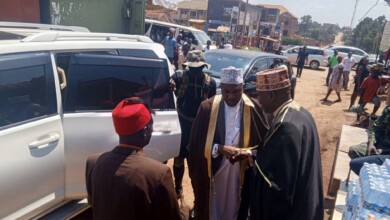
The clerics made the call during an event to mark this year’s Prophet Muhammad’s birthday at Ridha Islamic schools in Kiteezi, Nansana Municipality, Wakiso district on Saturday.
The schools were established by ex-Supreme Mufti sheikh Zubair Sowedi Kayongo to offer a learning opportunity to the orphans and needy children regardless of their religious affiliations.
Muhammad was born on April 20, 570 AD. He is venerated as the last prophet in Islam. Therefore, the clerics want this day gazetted as a national public holiday.
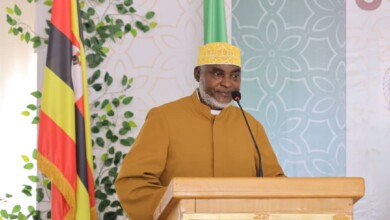
Led by Sheikh Ismail Mpanga-Bbumba, the deputy honorary consul of Malaysia in the country, the clerics argue that this will foster unity among the Muslims in the country.
“In almost every member state of the Organisation of Islamic Cooperation (OIC), this day is observed as a public holiday. We, therefore, request the government to gazette this day as a national public holiday because it is also a member state of OIC,” Bbumba said.
Drawing from a resolution made by the OIC member states in June this year, directing all member states to annually commemorate the birth of Prophet Muhammad known as Mawlid al-Nabi, Bbumba argues that this will also provide an understanding of the Prophet’s legacy to Muslims through cultural programs, dialogue, and educational initiatives.
“In Malaysia and many other countries, this is observed as a national public holiday, and we request the government to look into this. We believe this day can also promote unity among Muslims,” Bbumba noted.
Currently, every Muslim group celebrates the day on its own date. Bbumba argues that this does not bring out well the intended purpose.
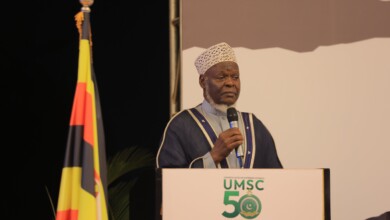
Bbumba was supported by Dr Adam Ssebyala, a renowned Muslim scholar. Citing Prophet Muhammad’s exemplary life, Ssebyala said it is important to gazette a national public holiday to celebrate him so that people can emulate him.
“We are having a challenge of discipline as the Muslim community, and I believe this is because the current generation has failed to have a proper understanding of how Prophet Muhammad lived. It is therefore imperative to come up with a national day for him so that we can teach people his ways of life so that they can emulate him,” Ssebyala said.
Ssebyala noted that prophet Muhammad was a symbol of unity and peace. “He lived peacefully with non-Muslims and he never insulted any one. This is what we want our people to emulate from him,” Ssebyala said.
Ssebyala said clerics who attack members of other faiths lack a proper understanding of the Islamic faith.
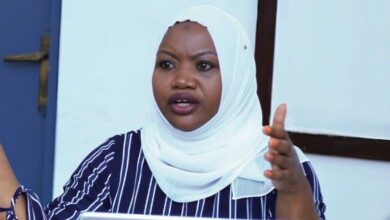
Sheikh Hassan Mayambala, the director of Sabar Dawa Group of Uganda criticised Muslim clerics especially from the Tabliq community, accusing them of fuelling conflicts within the muslim community over misinterpretation of the Quran. The Tabligh don’t celebrate the Prophet’s birthday.
“I implore Muslims to be careful with the Tabliq sheikhs because it has become a habit for them to deliberately misinterpret the Quran. Therefore, do not take whatever they teach as gospel truth. Before hiding from their teachings, consult with other sheikhs otherwise they may mislead you,” Mayambala said.
Mayambala also urged the government to keep a watch on them, claiming that some of them are extremists.
Sheikh Ali Sulaiman Mundu, the head of the Sharia Tariqa (path) in Uganda underscored the importance of proper interpretation of the Quran by the Muslim clerics noting that improper misinterpretation of the same is disastrous.
“Many of the challenges we have in the Muslim countries are as a result of improper misinterpretation of the Quran. I, therefore, urge Muslim clerics to widen their knowledge in the Quran to avoid misleading the people,” Mundu said.
Mundu also warned Muslims to be careful with the fatwas (Islamic rulings) issued by some of the Tabliq clerics noting that many of them are misleading.
“How can you say that buying a coffin for a deceased non-Muslims relative is not permissible in Islam? Where do you get that yet even some of the family members of the prophet were not Muslims but he never segregated them. We should therefore be very careful with such fatwas that are not only misleading but divisive in nature,” Mundu said.
Commenting on the forthcoming general elections, Mayambala urged Muslims to fully take part in them so that they are not left behind.
“I urge all Muslims to fully take part in the forthcoming elections and choose the best leaders, otherwise if you do not, we shall be governed by our detractors,” Mayambala said.