
Qadhi Courts Bill gazette, set for parliamentary debate
By Sarah Nalule
After decades of debate within Uganda’s Muslim community, the long-awaited move to establish Qadhi courts has taken a significant step forward with the gazetting of the proposed legislation.
The Qadhi Courts Bill, 2026, was officially published in the Uganda Gazette on February 27, clearing the way for its introduction and debate in Parliament. If enacted, the law will create a legal framework for handling matters of Muslim personal law, including marriage, divorce, inheritance and guardianship among Muslims.
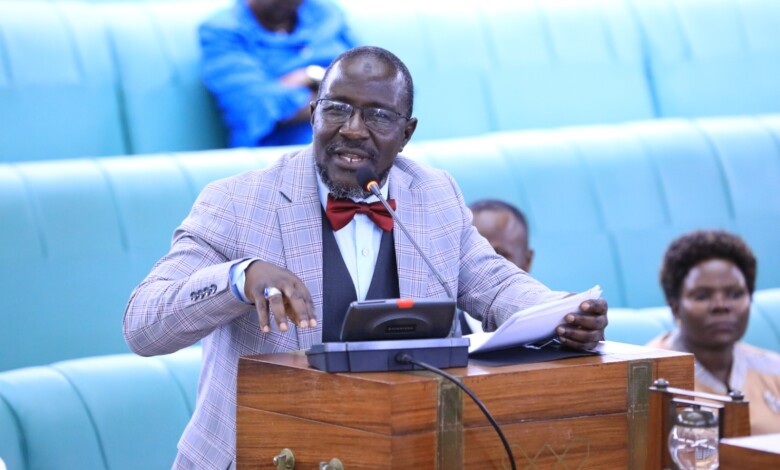
On August 7, 2025, the outgoing Bugiri Municipality MP, Asuman Basalirwa, was granted leave of Parliament to prepare the Private Member’s Bill aimed at operationalising Article 129(1)(d) of the Constitution.
The constitutional provision, which provides for the establishment of Qadhi courts, has remained largely dormant for decades due to the absence of an enabling law. The publication of the Bill in the Gazette also indicates that it has been issued with the required Certificate of Financial Implications — a key procedural requirement for privately sponsored legislation to be considered by Parliament.
“Our next step is to ask the Speaker to include it on the Order Paper for its second reading,” Basalirwa told The Friday Call on February 10.
Basalirwa is keen to have the law passed before the current Parliament is dissolved on April 24. Failure to secure its passage before then would require the process to start afresh.
This follows a precedent set in September 2021 by the late Jacob Oulanyah, who ruled that any parliamentary business left incomplete at the end of a parliamentary term lapses.
“Any Member or indeed the government who is desirous of having the business of the 10th Parliament revived should have the business reintroduced to the House, and the business shall begin afresh,” Oulanyah said at the time.
He relied on Rule 235(1) of the Rules of Procedure, which provides that a Bill, petition, committee process or any other parliamentary business lapses upon the expiry of the term of Parliament. However, Rule 235(2) provides a limited exception, allowing such business to be reinstated through a resolution of the House, subject to specific conditions.
MUSLIM LAWYERS URGED TO PREPARE
As the proposed legislation moves closer to parliamentary debate, Muslim lawyers in Uganda have been urged to deepen their understanding of Islamic jurisprudence in preparation for the anticipated Qadhi courts.
Addressing a training and reflection session organised by the Uganda Muslim Lawyers Association (UMLAS), legal scholar Faizal Mulalira said justice remains a central principle in Islamic law and should guide Muslim lawyers who intend to practise before Qadhi courts.
Mulalira noted that the Holy Qur’an places justice at the centre of moral responsibility, urging believers to uphold fairness even when it conflicts with personal interests or social loyalties.
Citing Qur’an 4:135, he said: “This verse reminds us that justice must always prevail, even when it challenges our own interests, our communities or those in authority.”
He added that equality before the law has historically been a defining principle of Islamic governance and judicial practice. As an illustration, he referred to an incident involving Umar ibn al-Khattab, who once appeared before a judge as an ordinary litigant. When the judge attempted to show him special respect because of his position as ruler, Umar objected and insisted that both parties be treated equally before the court.
He also encouraged Muslim lawyers to adapt to the evolving legal environment by embracing modern learning tools such as webinars, online lectures and virtual discussions to broaden their legal knowledge.
UMLAS president Rashid Ssemambo called on Muslim lawyers to play a more active role in promoting justice and unity in society.
Ssemambo noted that the world is experiencing growing conflict and division, making it essential for legal professionals to stand firmly for justice and fairness.
“As Muslims across the world, we are living in a time marked by conflict and violence. As advocates and Muslim leaders, we must stand firmly for justice, equity and fairness in society,” Ssemambo said.
He urged Muslim lawyers to maintain unity and speak with one voice on issues affecting the Muslim community.
“Whenever we appear in public, we must speak as one voice because if we fail to do so, we all lose,” he said.
“We must build our capacity by gathering knowledge that will help us serve society better. As Muslim lawyers, we still have much to do in acquiring knowledge and contextualising it to the realities around us,” he added.