
Sudan appeals to Uganda’s faith leaders for refugee relief ahead of Ramathan
By Ahmed Idriss
Sudan has turned to faith-based diplomacy as part of efforts to support its citizens displaced by ongoing conflict, with its Ambassador to Uganda seeking cooperation from Uganda’s top Muslim leaders in providing relief and guidance for Sudanese refugees ahead of the Holy Month of Ramadhan.
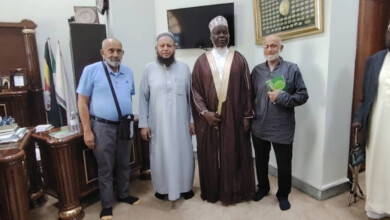
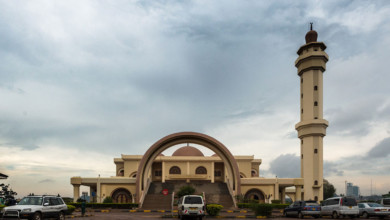
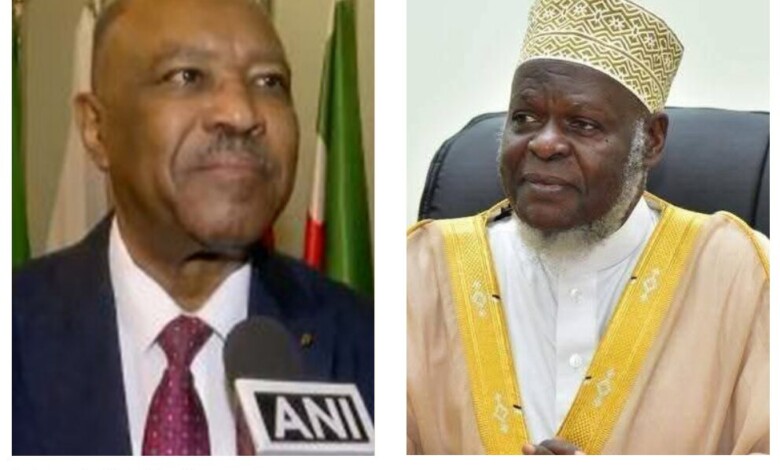
On Wednesday, February 11, 2026, Ambassador Ibrahim paid a courtesy visit to Sheikh Shaban Ramadhan Mubaje, the Mufti of Uganda, at the Uganda Muslim Supreme Council (UMSC) headquarters on Old Kampala Hill.
During the meeting, the Envoy spoke about the impact of Sudan’s internal conflict, which has caused killings, mass displacement, and the destruction of property. Nearly ten million Sudanese have fled the country, with Uganda currently hosting over one hundred thousand refugees.
“The situation is now returning to normal, with peace being restored in many areas, including Khartoum Capital City, which is now fully under the Government,” he said.
The Ambassador emphasized the need for closer cooperation between the Sudanese Government and the Mufti’s Office to support refugees during Ramadhan. He requested assistance in welfare programs, special supplications during Friday congregational prayers, and dissemination of information to encourage peace and reconciliation among Sudanese communities in Uganda.
“We hope that religious leaders can use their sermons to inform congregants that the situation in Sudan is improving so that refugees may consider returning home safely,” Ambassador Ahmed said.
Mubaje welcomed the initiative, highlighting the spiritual and social role that religious institutions can play in helping displaced communities. He prayed for full peace and stability in Sudan and encouraged returning refugees to share positive reports with family and friends still abroad.
“We are delighted to hear that the situation is returning to normalcy, and we pray that peace is fully restored in Sudan,” the Mufti said.
The Mufti also noted the longstanding cultural, religious, and social ties between the peoples of Sudan and Uganda, emphasizing that collaboration on humanitarian efforts strengthens regional solidarity.