
Thanawi graduates are not Sheikhs — Mubaje
By Jafar Mugera
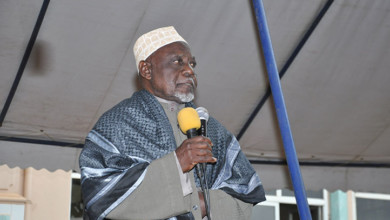
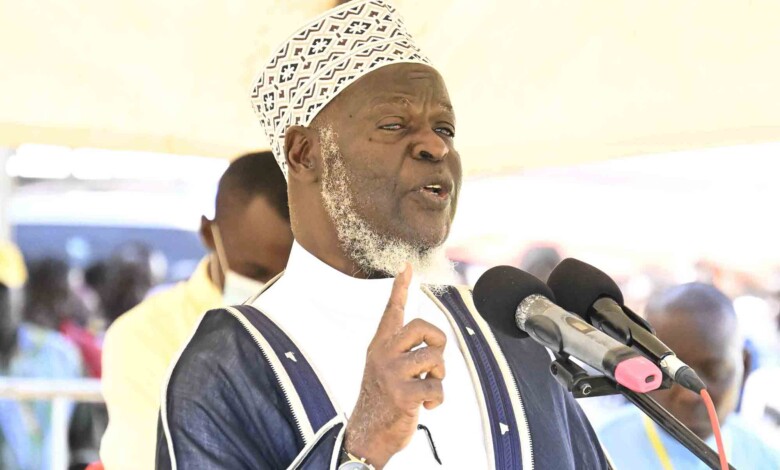
In a no-holds-barred address, the Mufti of Uganda, Sheikh Shaban Ramathan Mubaje, has issued a stern warning to holders of Thanawi certificates—an A-level equivalent—ordering them to stop parading themselves as sheikhs.
“The problem begins with theological schools that tell students that they have become sheikhs, instead of telling them the truth—that a Thanawi certificate is merely a bridge to university studies, which eventually qualify one for the title of sheikh,” Mubaje said.
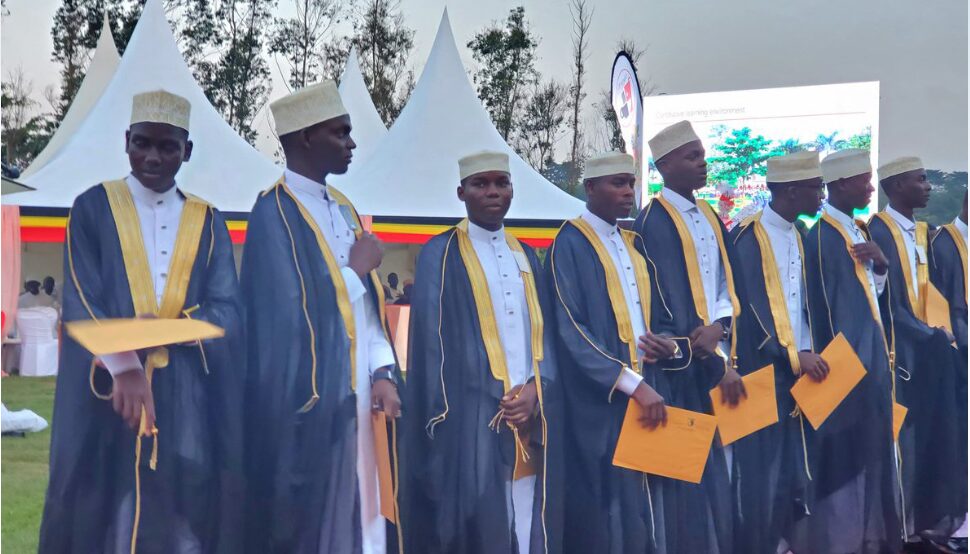
He made the remarks at a gathering hosted by the Rector of the Islamic University in Uganda (IUIU), Prof Ismail Simbwa Gyagenda, at his residence in Mbale, following the successful 34th graduation ceremony of the university.
A total of 2,488 students graduated in various disciplines last December.
“It is the majority of these unqualified sheikhs who are misusing social media to insult and demean leaders, issue controversial fatawas (Islamic rulings), and comment on religious matters that are beyond their knowledge and understanding,” Mubaje said.
At the inception of the Uganda Muslim Supreme Council (UMSC) in 1972, a Thanawi certificate was set as the minimum qualification for appointment as a district kadhi. However, with the growing number of graduates in Islamic theological studies, the Mufti said the qualification is no longer sufficient.
“The time is coming when a degree will be a must for anyone seeking to become a district kadhi. As it stands now, one cannot enter the top hierarchy of UMSC without a degree,” he said.
IUIU and the Old Kampala–based Islamic Call University College are the only institutions in the country that award degrees in Islamic theology. However, the majority of students at both institutions enrol in secular programmes.
Of the 2,484 graduands at IUIU’s 34th graduation ceremony, only 43 were from the Faculty of Islamic and Arabic Studies. Among them, 10 were awarded Bachelor’s degrees in Sharia, while five graduated with degrees in Islamic Studies.
At the master’s level, 14 students graduated in Sharia, while 12 completed programmes in Islamic Studies and Arabic Language. Two graduates were awarded Doctor of Philosophy (PhD) degrees in Islamic Studies.