
The exemplary life of Sayyiduna ‘Abdullah ibn ‘Umar ibn al-Khattab
In the annals of Islamic history, illuminated by the stars of the noble Companions, few figures shine with the consistent, unwavering light of ‘Abdullah ibn ‘Umar ibn al-Khattab.
His life—spanning from the dawn of the Prophetic mission in Makkah to the turbulent years of the early Umayyad era—stands as a timeless paradigm of devout scholarship, scrupulous adherence to the Sunnah, and principled neutrality in the face of tribulation.
He was born in the sacred precincts of Makkah in the third year after the Prophet Muhammad received revelation, into a household destined for greatness. His mother was the righteous Zainab bint Maz’un, the sister of the Companion ‘Uthman ibn Maz’un.
His father was none other than the formidable ‘Umar ibn al-Khattab, the future second Caliph of Islam. His sister was the revered Umm al-Mu’minin, Hafsah bint ‘Umar, a wife of the Prophet. Thus, from his earliest days, he was cradled in an environment of faith, courage, and intimacy with the Messenger of Allah.
A Youth in the Shadow of Prophethood
Abdullah embraced Islam in his tender youth, alongside his great father. He made the Hijrah to Madinah at the age of ten. His zeal to stand with the believers was such that he presented himself for battle at Badr while only thirteen, and again at Uhud at fourteen. Out of mercy and divine wisdom, the Prophet gently turned him away, safeguarding the young boy until he reached maturity.
His first military experience came at the Battle of the Trench (Khandaq), after which he participated in the subsequent, triumphant campaigns of the Prophet, including the Conquest of Makkah. He later fought with distinction in pivotal battles such as Mu’tah, Yarmouk, and Qadisiyyah during the caliphates of Abu Bakr and ‘Umar, demonstrating unwavering bravery in the path of Allah.
A REFUSAL OF WORLDLY AUTHORITY AND A TURN TO KNOWLEDGE
Despite his impeccable lineage and stature, ‘Abdullah ibn ‘Umar possessed a soul that was indifferent to the allure of political power. When the caliphate was offered to him after the martyrdom of ‘Uthman, he declined, believing it was not his destined role.
He similarly refused judicial positions. His heart was drawn elsewhere: to the preservation, understanding, and living embodiment of the Prophetic tradition. He chose the path of the student and teacher, devoting his life to ‘ilm (knowledge).
Due to his unique position of growing up in the Prophet’s household and his lifelong, dedicated companionship, ‘Abdullah ibn ‘Umar became a paramount authority in Islamic jurisprudence.
For sixty years, he was the leading mufti in the city of Madinah. People would journey to him seeking verdicts, particularly on the rites of Hajj, in which he was considered the most knowledgeable Companion.
His legal opinions were characterized by extreme caution and profound fear of Allah. He would not hesitate to say “I do not know” if uncertain, setting a standard of scholarly integrity for generations to come.
A Prolific Narrator of Hadith
He is counted among the most prolific narrators of Prophetic hadith. His transmissions form a bridge between the revelation and the generations that followed. He narrated from the Prophet directly, as well as from the righteous caliphs Abu Bakr, ‘Umar, ‘Uthman, and ‘Ali. A dedicated compilation of his narrations, known as his Musnad, contains over 2,630 hadiths.
His narrations are foundational in the canonical collections; Imam al-Bukhari and Imam Muslim recorded numerous hadiths through his reliable chain, most famously via his freed slave and esteemed student, Nafi’.
A Martyr’s End
The pious life of this great Companion met a tragic end. In the year 73 AH, the oppressive governor al-Hajjaj ibn Yusuf, angered by Ibn ‘Umar’s refusal to give him the oath of allegiance on his terms, sent an assassin who wounded the elderly Companion with a poisoned spear.
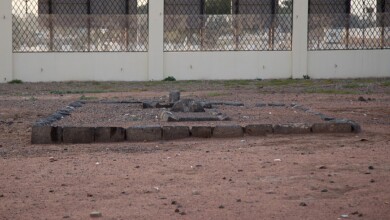
Even in this final struggle, it is said Ibn ‘Umar defended himself. He succumbed to the poison, dying as a martyr in the sacred city of Makkah. With his passing, the last of the great Companions in Makkah was gone. He was buried in the area of Fakh, now known as al-Zaher, at the age of approximately eighty-five.