PLE results: Muslim schools shine
By Friday Call team
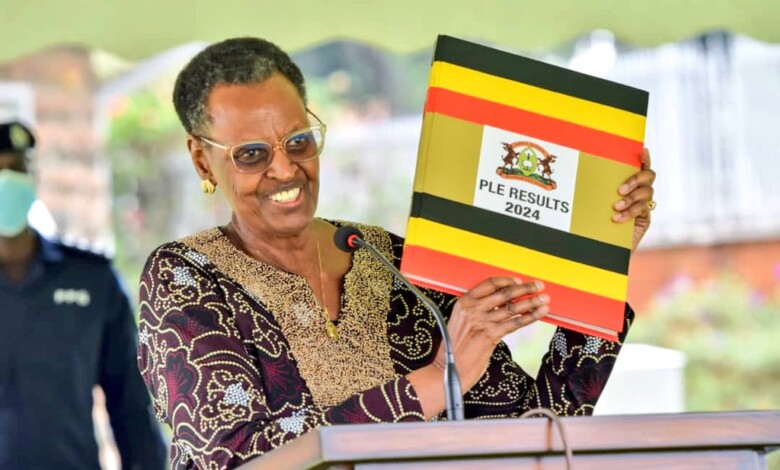
The Education and Sports minister, Janet Kataha Museveni, has commended the Uganda National Examinations Board (UNEB) for moving beyond traditional grading systems to evaluate students’ mastery of both knowledge and practical skills. Speaking at the release of the 2024 primary leaving examinations, Mrs Museveni stated that the new approach ensures that learners are prepared to apply their education in real-world situations, making them more equipped to contribute meaningfully to society.
“By focusing on a holistic assessment approach, UNEB is setting a strong foundation for our students, ensuring they are not just number-based achievers but also critical thinkers and problem-solvers,” Mrs Museveni said. She also urged UNEB to provide more training for teachers to help them better understand and apply the new assessment model to ensure that it is effectively implemented across schools.
Despite the overall positive outcomes of the 2024 PLE, the Minister expressed concern over the malpractice of schools registering normal learners under the “special needs” category in order to gain extra time during exams. Hon. Museveni stressed that this unfair practice undermines the integrity of the education system and tarnishes the credibility of the PLE results. She called for strict disciplinary measures against schools and individuals found engaging in such actions, emphasizing that fair and transparent practices must be upheld at all times.
A total of 797,444 candidates registered for the 2024 exams from 14,883 examination centres across the country. Of the 2024 candidates, 524,025 (65.7 percent) were from Universal Primary Education (UPE) schools, while 273,419 (34.3 percent) came from non-UPE centers.
Gender analysis of the 2024 PLE results revealed that 378,709 (47.5 percent) of the registered candidates were boys, compared to 418,750 (52.5 percent) girls.
Mrs Museveni praised the increasing number of girls completing primary education, noting that it is a positive sign of gender equity in education. “It is heartening to see that more girls are completing their primary education, a trend that we hope will continue as we work toward providing equal educational opportunities for all students, regardless of gender,” she said.
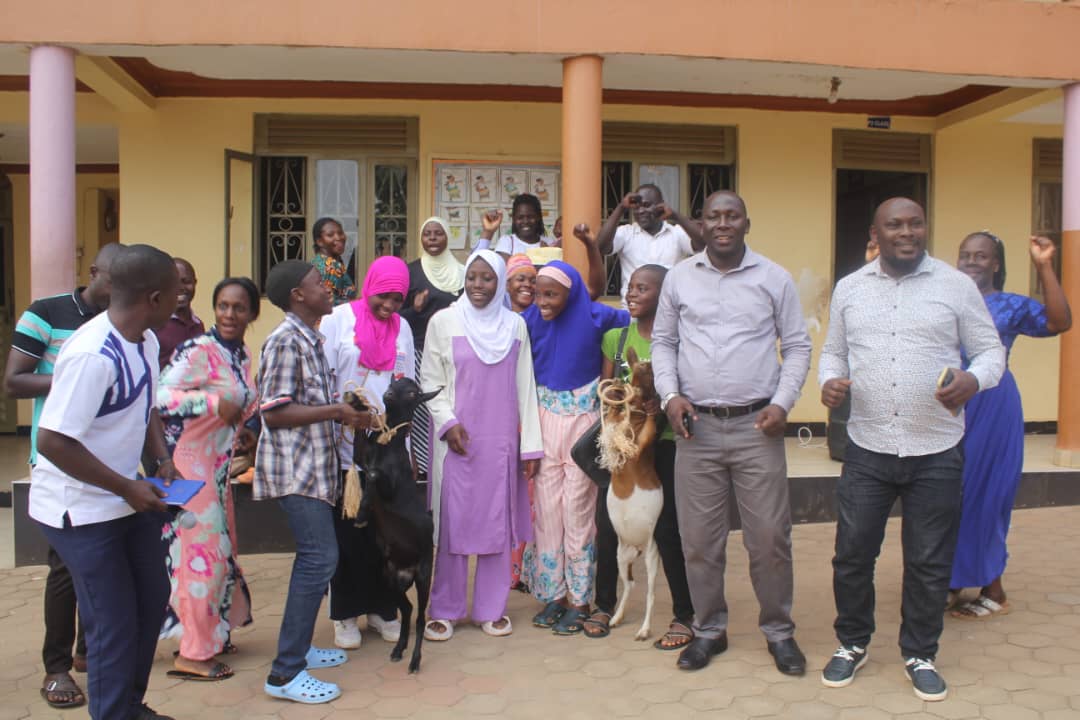 Parents and teachers of Asiya Kids School celebrate after receiving the PLE results
MUSLIM SCHOOLS
An assessment of the performance of the Muslim schools was not readily available from the Uganda Muslim education association (UMEA) but The Friday Call’s analysis of the results shows an improvement in performance.
In Mbarara, Biharwe Moslem Primary School had the highest percentage of candidates passing in Division One. Out of its 30 candidates, 12 achieved first grade. Madarast Noor in Mbarara City followed closely, with 18 of its 91 candidates passing in division one. Madasatul Nusurat also performed well, recording nine first-grade passes from 60 candidates.
Kakoba Moslem Primary School and Madarasatul Umar Kasenyi each registered nine first-grade passes from their respective 44 candidates. Nyamitanga Muslim Primary School posted six first-grade passes from its 29 candidates. Ruti Muslim Primary School and Ruharo Moslem Primary School each had two candidates pass in Division One, with 22 and 27 candidates, respectively.
In Masaka, K.Y. Day and Boarding Primary School achieved a remarkable feat, with all 168 of its candidates passing in division one. Among them, 24 candidates scored aggregate four, and 29 scored aggregate five.
In Mukono, Umar B.A. Islamic Centre recorded 109 candidates passing in division one and 14 in division two. Asiya Kids School in Kiteezi, Wakiso District, had 27 candidates, with 10 passing in division one, 16 in division two, and one in division three. Isra Junior School in Ndejje, Wakiso district, had all 15 of its candidates pass in division one.
Masha Junior School, Salaama, had four of its six pioneer candidates recording a first grade and two passed in division two while all the 36 candidates at Ali Bin Abu Twalib Primary School, Kikooto in Bukomansimbi district posted first grades.