The Qadhi Courts Bill, 2026: A legal clarification in an age of anxiety
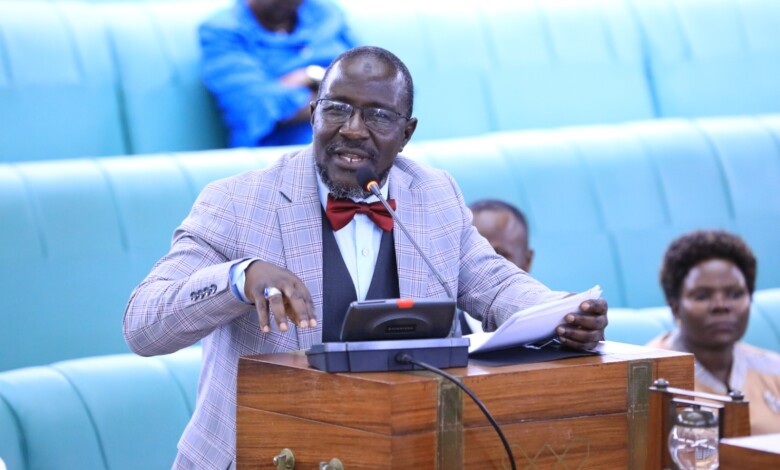
By Mukasa Sirajeh Katantazi
Public debate surrounding the recently gazetted Qadhi Courts Bill has, in a few short days, taken on an unusually alarmist tone. Strong claims have been made—some invoking existential threats to constitutional order, religious freedom, and national cohesion. While public vigilance is a hallmark of democratic health, it is equally important that legal discourse remains anchored in fact, doctrine, and constitutional structure.
The starting point must be the Republic of Uganda Constitution 1995(as amended). Article 129(1)(d) expressly provides for Qadhi courts. This provision was adopted as part of a carefully negotiated constitutional settlement recognising Uganda’s religious diversity. The present Bill does not introduce Sharia into Uganda’s legal system; rather, it seeks to operationalise a constitutional provision that has remained dormant for over three decades.
A central claim advanced by critics or should I say distortionists, is that the Bill establishes a parallel judicial system capable of displacing the ordinary courts. This is not borne out by the structure of the Bill. The proposed Qadhi courts—whether at district, regional, or appellate level—are expressly situated within the broader judicial hierarchy and remain subordinate to the High Court. Their jurisdiction is limited to matters of Muslim personal law: marriage, divorce, inheritance, guardianship and related family issues.
In legal terms, jurisdiction is not a flexible concept—it is foundational. A court cannot assume authority beyond what is expressly granted to it. Any act outside jurisdiction is void ab initio. The fear that Qadhi courts could evolve into bodies exercising criminal jurisdiction or general civil authority is therefore inconsistent with basic principles of adjudication.
Closely linked to this is the principle of legality in criminal law: no individual may be subjected to criminal sanction except in accordance with clearly established law. The Bill does not confer criminal jurisdiction on Qadhi courts, nor could it do so without running afoul of constitutional safeguards. Assertions that the Bill opens the door to punitive criminal enforcement under religious law are, with respect, legally unsustainable.
Another recurring concern relates to the provision allowing non-Muslims to submit to the jurisdiction of Qadhi courts. This “voluntary submission” clause has been portrayed as a potential vehicle for coercion. Such concerns are not entirely without basis in comparative experience and deserve careful legislative clarification. However, it is important to distinguish between legal possibility and legal inevitability. Properly framed, voluntary submission operates as a mechanism of choice—akin to arbitration or mediation—rather than compulsion. The solution lies in drafting safeguards, not in rejecting the framework altogether.
Comparative jurisprudence is often invoked in this debate, though not always with sufficient nuance. References to Nigeria or Iran or overlooking the fundamental constitutional differences between those jurisdictions and Uganda. In contrast, more instructive parallels may be found in Kenya, where Kadhi courts operate within a secular constitutional framework, or India, where personal religious laws coexist with a unified judicial system. These examples demonstrate that legal pluralism, when properly regulated, need not threaten constitutional order.
The financial autonomy of the proposed courts has also attracted criticism. Yet, in practice, all courts derive funding from the Consolidated Fund as appropriated by Parliament. The existence of a distinct budget line does not create institutional independence from the state; it merely facilitates administrative functionality. Similar arrangements exist across specialised judicial and quasi-judicial bodies.
Equally important is the issue of judicial appointments. While the Bill provides for the appointment of Qadhi judicial officers with expertise in Islamic jurisprudence, these appointments do not occur in a constitutional vacuum. They remain subject to broader principles of public accountability and must operate within Uganda’s legal system as a whole.
It is also necessary to address the broader narrative—namely, that the Bill represents a step toward the “Islamisation” of Uganda. This claim, though rhetorically powerful, does not withstand constitutional scrutiny. Uganda remains a secular state in the sense that it does not adopt an official religion, but it is not indifferent to religion. The Constitution guarantees freedom of belief and permits the recognition of religious norms in personal matters. The existence of customary law and religious marriages within Uganda’s legal framework already reflects this pluralistic approach.
None of this is to suggest that the Bill is beyond improvement. On the contrary, legislative refinement is both necessary and desirable. Clearer safeguards on voluntary submission, explicit reaffirmation of constitutional supremacy, and stronger procedural guarantees would enhance both the integrity of the Bill and public confidence in its implementation.
However, reform must proceed from a position of legal clarity rather than apprehension. The role of Parliament is not merely to accept or reject, but to scrutinise, amend, and perfect. Similarly, the role of public commentary is not only to warn, but to inform.
The Qadhi Courts Bill, 2026 ultimately raises a deeper constitutional question: how should a diverse society structure its legal system to reflect both unity and difference? Uganda’s answer, since 1995, has been to recognise diversity within a single constitutional order. The present Bill should be evaluated within that tradition—not outside it.
In the final analysis, the challenge before us is not whether Uganda should fear its own Constitution, but whether it is prepared to give effect to it with fidelity, balance, and reason.
Ps: It’s totally baffling that we still live in a country where someone thinks they can fuel religious hatred by stoking the embers of fear—forgetting the warning of Martin Niemöller:
“First they came for the Communists, and I did not speak out because I was not a Communist.
Then they came for the Socialists, and I did not speak out because I was not a Socialist.
Then they came for the trade unionists, and I did not speak out because I was not a trade unionist.
Then they came for the Jews, and I did not speak out because I was not a Jew.
Then they came for me and there was no one left to speak for me.” We must and ought to embrace pluralism.
The author is the Chief Executive Officer of the Uganda Muslim Lawyers Association