Alur Kingdom, Zombo Muslim leaders partner to expand education
By Ahmed Idriss
Calls to bridge the professional skills gap through a dual focus on religious and secular education dominated a high-level meeting between Zombo Muslim leaders and the Alur Kingdom on Saturday. Stakeholders warned that a historical lack of technical and scientific training has left young Muslims underrepresented in key sectors like medicine and engineering.
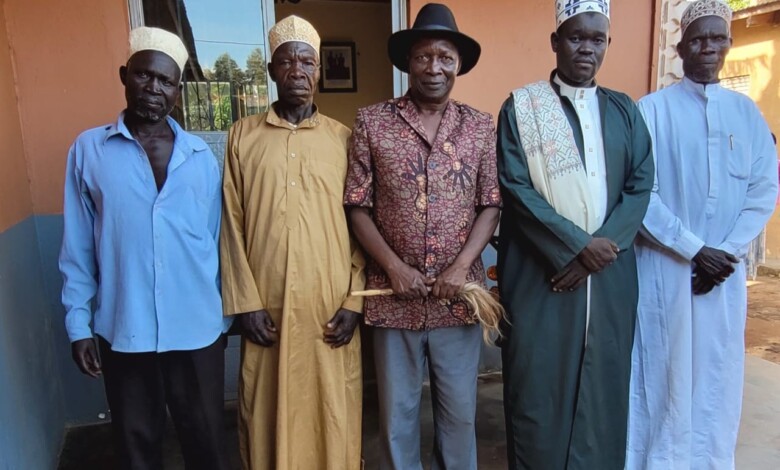
The discussion took place during a courtesy visit to the Alur Kingdom Prime Minister, Prince Lawrence Opar Angala, at his office in Yamo Trading Centre, Atyak Sub-County. Led by the Zombo Muslim District Kadhi, Ustadh Abdulaziz Qaasim Amin Alkury, the delegation sought to deepen the relationship between the cultural institution and the local Muslim community.
During the engagement, the Kadhi commended the Alur Kingdom for its long-standing support of Muslim initiatives, particularly through land facilitation for religious institutions and its active promotion of interfaith harmony.
However, he stressed that while Islamic education remains foundational to community identity, families must aggressively invest in science-based and professional disciplines to uplift livelihoods and reduce economic inequality.
“We must ensure our children are not left behind in medicine, engineering, and other professional fields,” Ustadh Abdulaziz noted, according to officials present at the meeting.
Prince Lawrence Opar Angala welcomed the call, emphasizing that balancing secular education with religious grounding is essential for sustainable development. He noted that academic and technical training remain the Kingdom’s primary tools for tackling youth unemployment and driving social transformation across the region.
Beyond education, the delegation briefed the Prime Minister on plans to launch the Halal Farmers’ Center, a proposed mixed-farm project designed to create agricultural jobs for youth of all faiths. The Muslim leaders requested land support from the Kingdom to jumpstart the initiative, which they envision as a regional model for economic empowerment.
This partnership comes at a time of administrative growth for the local Muslim community. Under a nationwide restructuring drive by the Uganda Muslim Supreme Council to improve service delivery, Zombo Muslim District was recently established as its own independent unit after being carved out of the older Nebbi Muslim District.