Iran Envoy praises Ugandan solidarity, defends Tehran’s regional stance
By Issa Kigongo
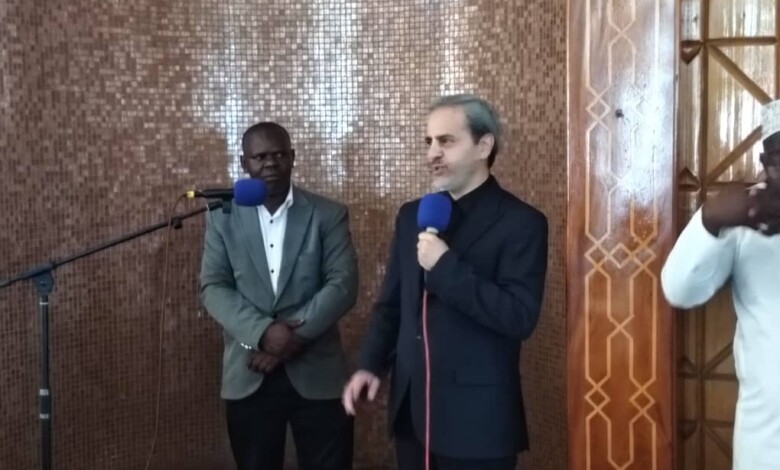
The Iranian ambassador to Uganda, Majid Saffar, has praised what he described as growing solidarity from Uganda’s Muslim community, using a post-prayer address in Kampala to defend Iran’s foreign policy and respond to ongoing regional tensions.
Speaking after Juma prayers at the Gaddafi National Mosque on Friday, Saffar said he had observed “warmth and support” from Ugandans during his posting. He singled out remarks made by Mufti, Sheikh Shaban Ramadhan Mubaje during Eid celebrations, as well as comments by President Yoweri Museveni at a recent Iftar dinner.
“I have seen that Ugandans are in support of Iran,” Saffar told worshippers and journalists, framing the relationship as one rooted in shared faith and mutual respect.
His remarks, however, extended beyond local appreciation to broader geopolitical issues, particularly Iran’s position in a volatile Middle East.
On regional security, the ambassador maintained that Tehran does not seek conflict with its neighbours.
“We do not have any grudge with our neighbours because they are our brothers and sisters,” he said, adding that Iran is engaged in ongoing discussions aimed at maintaining stability.
Saffar also revisited strained relations with the United States, pointing to the collapse of earlier nuclear negotiations. He accused U.S. President Donald Trump of derailing diplomatic progress by withdrawing from the deal, a move he said had complicated efforts to ease tensions.
Turning to the current conflict in the region, the envoy claimed that external powers were backing forces opposed to Iran, while insisting that Tehran’s actions are defensive.
“We are defending our country, and we are still strong,” he said.
He was sharply critical of Israel, which he described as a central driver of instability in the region. Saffar accused the Israeli government and its allies of disregarding international law and targeting civilians—claims that could not be independently verified.
“We are defending ourselves. Civilians and innocent people are being targeted,” he said.
The ambassador further alleged attacks on civilian infrastructure and senior figures, presenting these as evidence of what he called a broader pattern of aggression.
Despite the escalating rhetoric, Saffar struck a resolute tone, saying Iran would continue to pursue what it sees as a just outcome to the conflict.
“It is not about a ceasefire, but ending the war once and for all—on our terms,” he said.
He reaffirmed Iran’s support for Palestinians and other communities affected by the conflict, pledging continued solidarity.