Sheikh Bukenya traces evolution of Qur’an memorisation in Uganda
By Ahmed Idriss
For generations, memorising the Holy Qur’an in Uganda has been more than a religious practice—it has been a means of preserving faith, identity, and moral grounding within the Muslim community.
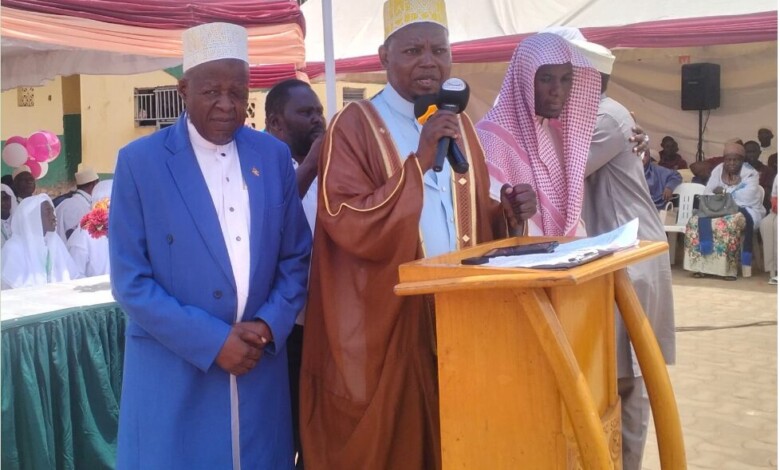
But this journey has not always been smooth. Speaking at the graduation of 18 Huffadh at Bilal Islamic Schools, the second Deputy Mufti, Hafidh Muhammad Harunah Bukenya, traced a two-century journey of Qur’anic education in Uganda—one marked by decline, revival, and transformation.
He recalled a time when Qur’an teaching was largely informal, conducted by individual sheikhs within homes and small community settings. While these efforts laid the foundation, they reached only a limited number of learners and lacked uniformity.
“At one point, proper methods of teaching the Qur’an declined,” Sheikh Bukenya noted, explaining that some learners began reciting verses in their native dialects—distorting pronunciation and meaning. This period, he said, threatened the preservation of the Qur’an’s original form within the local Muslim community.
The turning point came with the establishment of structured memorisation centres, particularly at institutions such as Bugembe Islamic Institute, which introduced organised Tahafidhu programmes. These centres standardized teaching methods, emphasized correct recitation (Tajweed), and created an environment where students could fully dedicate themselves to memorising the Qur’an.
Sheikh Bukenya, himself among the pioneer students of such centres, said the shift marked a new chapter—moving from scattered individual efforts to coordinated institutional learning.
Today, the impact is visible. Across Uganda, Qur’an memorisation centres have multiplied, producing a new generation of huffadh who are not only preserving the Qur’an but also representing the country on international stages.
At Bilal Islamic Schools, for instance, one of their former students, Abdallah Sajid Mutyaba, rose to global recognition after winning a Qur’an competition in Makkah and now serves as an international adjudicator. Yet, leaders say memorisation alone is not enough. Sheikh Bukenya urged the newly graduated huffadh to embody the teachings of the Qur’an in their daily lives, warning that knowledge without practice risks losing its value.
As Uganda continues to expand its Qur’anic education infrastructure, the focus is increasingly shifting from not just producing memorizers—but nurturing individuals who live by the message they carry.