Nameere’s appointment raises Muslim cabinet count to nine
By Jafar Mugera and Issa Kigongo
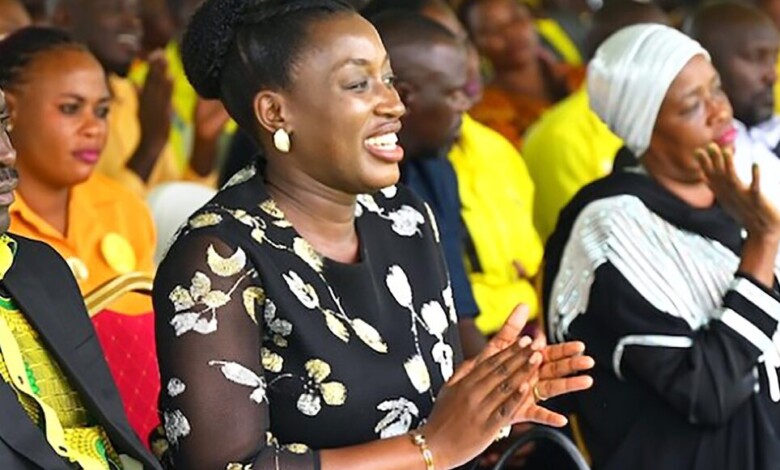
Justine Nameere, the designated state minister for Local Governments is the accidental addition to the number of Muslims in President Yoweri Museveni’s seventh elective-term cabinet.
Born and raised in a Catholic family headed by former Defence and Veteran Affairs minister Vincent Bamulangaki Ssempijja, Nameere later embraced Islam following her marriage to Hamzah Nsubuga.

Nameere’s appointment raises the number of Muslim ministers to nine, up from the eight who served in the previous cabinet.
According to the new cabinet list announced on Tuesday evening, President Museveni dropped two veteran Muslim figures — Gen. Moses Ali and Gen. Abubakar Jeje Odongo — who had served as 2nd Deputy Prime Minister and Minister of Foreign Affairs respectively. He retained Rukia Nakadama Isanga as 3rd Deputy Prime Minister and Minsa Kabanda as Minister for Kampala Capital City and Metropolitan Affairs.
Also retained in the new line-up are state ministers Huda Oleru (Veteran Affairs), Anifa Bangirana Kawooya (Health), Aisha Ssekindi (Water), and Haruna Kyeyune Kasolo, who has been transferred from Microfinance to the Ministry of Foreign Affairs as state minister for Regional Cooperation.
Another notable inclusion is Aminah Mukalazi hithero a special presidential assistant and head of State House’s Local Content Unit who has been appointed State Minister for Privatisation and Investment under the Ministry of Finance, Planning and Economic Development.
Siraj Musa Ali, a son of Gen. Moses Ali will join the cabinet as the state minister for Works.
MUSLIM LEADERS REACT
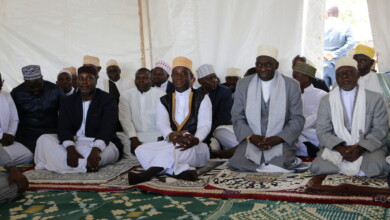
Delivering his Eid al-Adha sermon at the Uganda National Mosque in Old Kampala on Wednesday, May 27, 2026, the Mufti of Uganda, Sheikh Shaban Ramadhan Mubaje, took the opportunity to commend the President for his recent government appointments.
Speaking to the gathered congregation, Mubaje expressed sincere gratitude to the President for elevating Muslims to senior positions within the state infrastructure.
However, while acknowledging these appointments as a positive step, the Mufti explicitly noted that there remains a pressing need for a higher volume of Muslim representation to accurately reflect the substantial, long-standing support the Muslim community has given to the ruling National Resistance Movement (NRM) party.
In light of this political dynamic, Mubaje appealed directly for a sustained and deliberate increase in the number of Muslims serving across the wider public service.
“A small slice is not enough,” Mubaje said, as he called for more representation.
He challenged Muslim leaders serving in government to work diligently while safeguarding the interests of the Muslim community.
HAJJ CONCERNS
The Mufti also expressed concern over the handling of the Presidential Hajj sponsorship initiative in which President Museveni reportedly pledged to sponsor 150 Muslim pilgrims for 2026. He noted that although the Uganda Muslim Supreme Council (UMSC) was instructed to select 65 pilgrims nationwide, only 17 eventually managed to travel.
He further echoed concerns previously raised by Hajjat Minsa Kabanda and Hadji Abbas Muluubya Ssekyanzi regarding longstanding challenges in the management of Hajj affairs in Uganda, where some intending pilgrims reportedly make full payments but fail to travel.
The Mufti accused some private Hajj companies of commercializing the pilgrimage and undermining its spiritual essence, adding that UMSC is working to restore proper oversight to ensure better management of Hajj activities.
At the same time, he acknowledged improvements in the sector, including reduced Hajj costs compared to previous years, and pledged continued engagement with the Government of Uganda for further reforms.
The Eid al-Adha celebrations coincided with millions of Muslims undertaking the annual Hajj pilgrimage in the holy sites of Saudi Arabia.
The Mufti also appreciated charitable organizations and donors, especially from Türkiye and Saudi Arabia, for supporting annual animal slaughter and meat distribution programs that benefit people regardless of faith or affiliation.