Kawempe Muslim school row: ‘Start your own schools,’ Kibuli official tells rivals
By Abdu Wahid Kakande
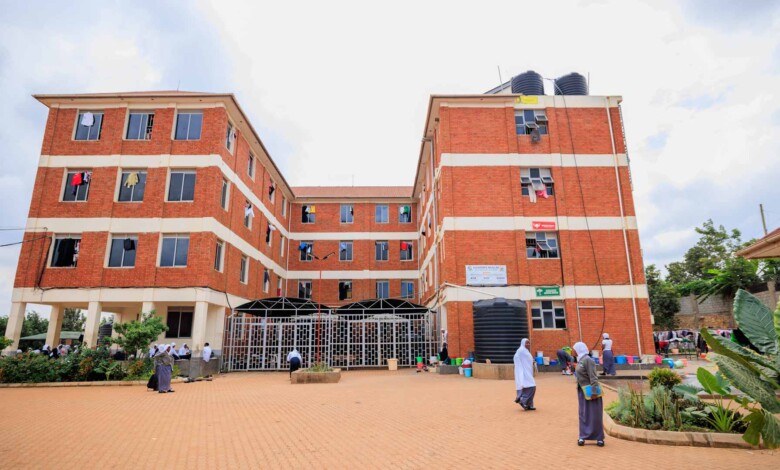
Dr Muhammad Musoke Kiggundu, the Director of Communication and Research in the Office of the Supreme Mufti at Kibuli, has challenged those fighting over the ownership of Kawempe Muslim Secondary School to stop the wrangle and establish their own schools.
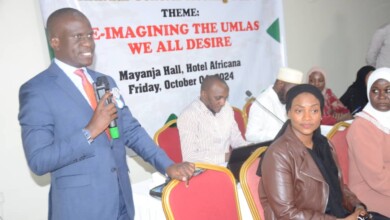
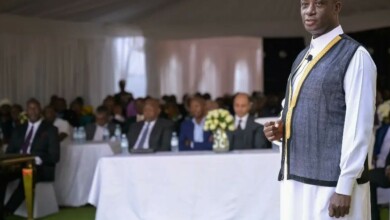
Speaking at memorial prayers for the late Hajj Ali Sserujonji in Kawempe, Dr Kiggundu said the institution was established to educate Muslim children and should not be dragged into disputes over ownership and control.
“If you were among those who started the school, it was done to educate the children of the ummah. Kawempe has nurtured many children. Forget what you are pursuing. Start your own school,” he said.
He urged the feuding parties to put the interests of learners first, arguing that the school had produced professionals who now serve the country and should not be allowed to deteriorate because of the dispute.
“The school is in safe hands. All the members of the board are very eminent persons and well educated. So, those fighting over this school should start their own,” he added.
Presiding over the prayers, Prince Kassim Nakibinge Kakungulu also criticised those involved in the ownership dispute, telling them to control their appetite.
The remarks come as the registered trustees of the Juma and Zukuuli Muslim community pursue a court case challenging the role of the Uganda Muslim Education Association (UMEA) in the founding and management of the school.
THE DISPUTE GOES TO COURT
In a suit filed before the Civil Division of the High Court in Kampala on June 29, 2026, the trustees asked court to recognise their community as the school’s founding body and permanently restrain UMEA from claiming that status.
The group includes Sheikh Hussein Rajab Kakooza, Sheikh Mahad Kabuye Kawoya, Sheikh Sufian Khalid Muguluma, Sheikh Umaru Muusa Ssebumba, and Hajji Ali Mpungu Kakomo. Others are Hajji Ismail Nsubuga Nsambu, Abdul-Aziz Lukwago, Ismael Kikabi, Hamadi Muyomba, Hajj Muzafalu Kasule Takuba and Sheikh Muhammad Ali Lubega.
UMEA, the government and the school’s board of governors are named as defendants.
The trustees argue that members of the Juma and Zukuuli community resolved on March 25, 1984, to establish the school and provided the five acres of land on which it stands. They contend that UMEA was incorporated in 1995, 11 years after the school was established, and therefore cannot lawfully claim to be its founding body.
They want court to declare the Juma and Zukuuli community the legitimate founders and set aside the appointment of the current board of governors, which they describe as irregular and unlawful because they were not involved in the process.
The group has also accused the Permanent Secretary of the Ministry of Education, Dr Kedrace Turyagenda, of failing to address what it considers irregularities in the school’s governance.
How the school was established
Kawempe Muslim Secondary School traces its origins to 1984, when the Government pursued a policy of establishing a secondary school for every constituency.
According to the account of the school’s establishment, the Muslim community initially found itself without a secondary school and approached the Kampala City Council (KCC) education department for clarification.
On February 25, 1984, the KCC education officer reportedly informed the community that a school had been granted and that arrangements should be made to pay the registration fees.
The school was subsequently established as a special gift to Kawempe Muslim Primary School in recognition of its strong academic performance over more than a decade.
Leadership wrangles within Juma and Zukuuli
The court case has unfolded amid divisions within the Juma and Zukuuli Muslim community, particularly following the controversial removal of Sheikh Muhammad Lunanoba as its president general.
The divisions also reflect wider disagreements over Muslim leadership. Some members of the community are affiliated with the Uganda Muslim Supreme Council (UMSC), while others, including Lunanoba, align with the Office of the Supreme Mufti at Kibuli.
In March 2023, Justice Musa Ssekaana ruled that the management committee led by Lunanoba, which had been in office since 2001, had expired and ordered it to hand over power.
Sheikh Mahad Kabuye Kawoya was subsequently elected president general, with Sheikh Sufian Khalid Muguluma as his deputy. Lunanoba’s group appealed against the orders, arguing that the new leadership had been elected before mediation was concluded.