Hijjaz SACCO sets sights on Muslim-founded bank

By Abdul Wahid Kakande
Members of Hijjaz Community Savings and Credit Cooperative Organisation (SACCO) are hoping to establish a Muslim-founded commercial bank, reviving memories of Greenland Bank, which was founded by the late Dr Sulaiman Kiggundu.
The ambition is being championed by a SACCO that has operated for five years and now boasts 5,080 members, with more than four coordination offices across Central Uganda.
Prof. Badru Ddungu Kateregga, a board member of the SACCO and founder and Vice Chancellor of Kampala University, said establishing a bank was the long-term goal behind the initiative.
“I encourage all Muslims to embrace this SACCO because our major goal is to establish our bank, and we can if we work together,” Kateregga said.
He was speaking during the SACCO’s thanksgiving ceremony, dubbed Hijjaz Shukur Day, held at Hotel Africana in Kampala on October 23.
The ceremony marked five years since the SACCO began operations and brought together members, Muslim leaders and representatives of financial institutions.
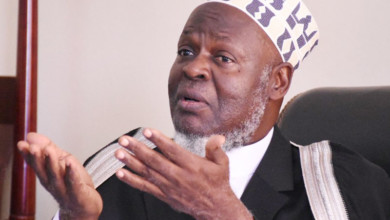
Presiding over the event, Sheikh Abdul-Noor Kakande, the Supreme Kadhi of Greater Mukono under the Office of the Supreme Mufti, welcomed the ambition and pledged to mobilise Muslims to join the SACCO.
“When I heard that your vision is to establish our bank, I got interested, and I pray that Allah makes this vision a reality,” Kakande said.
He, however, cautioned the SACCO’s leadership against poor financial management, saying public trust would determine whether the institution achieved its ambitions.
“What is affecting all our ventures is lack of accountability. I call upon you to be transparent and keep people’s money so that they gain trust in you. The moment people gain trust in you, it will be easy for you to establish our bank,” he said.
FIVE YEARS OF OPERATION
Muwalimu Elias Kigonya, the chairman of the SACCO board, said the thanksgiving ceremony was organised to appreciate Allah and those who had supported the institution through its first five years.
He noted that several SACCOs established around the same period had since collapsed, making Hijjaz’s continued operation a reason for celebration.
“We found it necessary to appreciate Allah for keeping us moving and those who have supported us in this five-year journey,” Kigonya said.
He said the SACCO had expanded its membership to 5,080 people and established more than four coordination offices in Central Uganda.
SEEKING SUPPORT FOR INTEREST-FREE FINANCING
Kigonya said operating an Islamic SACCO in Uganda had presented challenges, particularly in raising sufficient funds to provide financing without charging interest.
Unlike conventional lending institutions, Islamic financial institutions operate under principles that prohibit riba, or interest, and instead use financing arrangements permitted under Islamic law.
He said the SACCO was seeking support to establish a Revolving Economic Empowerment Fund (REEF), which would provide additional resources for its financing programmes.
The proposed fund would enable the SACCO to extend financing to more members while maintaining its Islamic finance principles.
“Therefore, we call upon everybody, charitable organisations, the business community, government and development partners to support us to put in place this grant so that we can lend money to a number of people to sustain the interest-free lending,” Kigonya said.
SAVINGS AND FINANCING PRODUCTS
The SACCO has introduced several savings products targeting individuals, businesses and community institutions.
These include personal savings accounts, business and company accounts, student accounts, mosque savings accounts, and dedicated savings plans for Hajj and Umrah.
Its financing services cover business activities, agricultural inputs and animal feeds, construction, asset acquisition and boda-boda operations.
BUILDING TRUST
Hajj Ismail Bbumba, a member of the Islamic Chamber of Commerce, welcomed the SACCO’s ambition and pledged support for its development.
“This philosophy of empowering our people is good, and we shall support you,” Bbumba said.
He, however, urged the administrators to invest in public education, saying many Muslims still did not understand how Islamic banking worked or how it differed from conventional banking.
Rashid Musisi, the chief corporate manager at Centenary Rural Development Bank, drew lessons from the growth of Centenary Bank, which began as a small financial institution before expanding into one of Uganda’s established commercial banks.
He told the SACCO’s leadership that its ambition was achievable but would require patience, commitment and strong management systems.
“Yes, you can use this SACCO as a vehicle to establish a bank, but you need to have passion and put in strong systems for you to realise your dreams. People will only join you if you are transparent,” Musisi said.