Supreme Mufti rebukes wealthy Muslims over unpaid Zakat

By Abdul Wahid Kakande
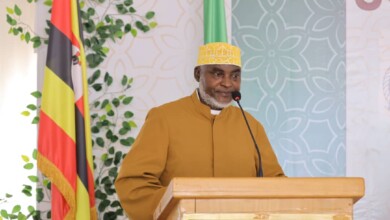
The Supreme Mufti, Sheikh Muhammad Shaban Galabuzi, has criticised wealthy Muslims who neglect their obligation to pay Zakat, saying they are denying vulnerable members of the community an opportunity to escape poverty.
Galabuzi made the remarks on Monday while distributing Zakat worth more than sh70m to vulnerable Muslims at Kibuli Mosque.
The beneficiaries received motorcycles, sewing machines, car-washing pumps, painting machines and cash to start or expand small businesses.
Galabuzi said he was disappointed that some wealthy Muslims regularly travel to Makkah for pilgrimage but fail to fulfil their obligation to pay Zakat.
“It is a pity that many wealthy Muslims prefer to make the pilgrimage to Makkah in Saudi Arabia every year without paying Zakat,” he said.
He reminded Muslims that Zakat is one of the five pillars of Islam and must be observed by those who meet the conditions for paying it.
Galabuzi said the obligation was intended not merely to provide temporary relief but to help struggling families become economically independent.
“Zakat is not meant to keep people dependent but to lift them from poverty to self-sufficiency,” he said.
He pointed to the equipment distributed, saying a motorcycle could provide a rider with daily earnings, while a sewing machine could enable a skilled tailor to establish a business.
His hope, he said, was that beneficiaries would eventually earn enough to become Zakat contributors themselves.
Among those who received support was Aminah, a tailor who had struggled to put her skills to use because she lacked a sewing machine.
She said the donation would enable her to establish a workshop and earn an income to support her family.
Galabuzi also urged Muslims in Uganda and the diaspora to channel their Zakat through recognised and accountable institutions.
He expressed concern about the growing number of organisations collecting Zakat without clear accountability mechanisms, warning that contributions must reach those who genuinely qualify for assistance.
He appealed to well-wishers and development partners to support his office in extending the programme to more communities.
Hajjat Hadijah Nakayiza, the treasurer in the Office of the Supreme Mufti, said the office had collected sh75m in donations and supplemented the funds to assist vulnerable Muslims who had sought support.
This year’s distribution targeted young people, women, persons with disabilities and other vulnerable groups who had the willingness and ability to work but lacked equipment or start-up capital.
Sheikh Yasin Kiweewa, the director of Dawa in the Office of the Supreme Mufti, said beneficiaries were selected based on their level of need, vulnerability and ability to put the assistance to productive use.
Before receiving the equipment and funds, they underwent training in entrepreneurship, savings and Islamic business ethics.
Kiweewa said the department had also established a monitoring system to follow up on beneficiaries and assess how the support was being used.
CONCERNS OVER ZAKAT ACCOUNTABILITY
Dr. Hamzah Namungo Kasujja, the chief executive officer of House of Zakat and Waqf Uganda, said Zakat could play a greater role in reducing poverty if more eligible Muslims fulfilled their obligations.
He explained that Zakat al-Maal, which is levied on qualifying wealth, provides a means of redistributing resources to those in need.
When properly collected and distributed, he said, the funds can help families acquire productive assets, support education and establish income-generating activities.
“If all wealthy Muslims pay Zakat, whose threshold is manageable, I think no Muslim should be poor. But the challenge we have is that only a few are paying it,” Kasujja said.
He attributed the low participation partly to mistrust arising from poor accountability among some organisations collecting Zakat.
Kasujja said some collectors fail to account for contributions, while others divert the money for personal use.
“This is something we must fight because people always want to see impact and accountability, which many normally don’t provide. I thank the Office of the Supreme Mufti for this openness,” he said.
He urged Zakat institutions to be transparent about how much they collect, who benefits and what impact the contributions have on people’s lives.