Kibuli Health Training school intensifies radiography training to address Uganda’s healthcare gaps
By Sarah Nalule
Kibuli Muslim Hospital School of Radiography has intensified efforts to train more radiographers as Uganda continues to face a shortage of imaging professionals needed to strengthen healthcare delivery across the country.
The institution says the expansion of radiography and medical imaging training is intended to bridge gaps in diagnosis and improve access to imaging services, especially in rural and underserved communities where patients often struggle to obtain timely medical examinations.
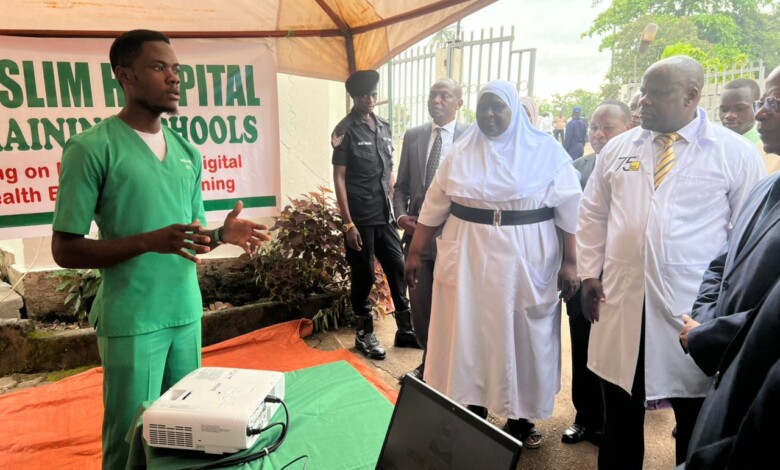
Speaking during the 9th graduation ceremony of Kibuli Muslim Hospital Health Training School, school leaders and health education officials emphasized the growing importance of radiography in modern healthcare systems as hospitals increasingly rely on imaging technologies for diagnosis and treatment.
According to Said Anjum Hamdoun, the Principal Tutor at the School of Radiography, Uganda currently has only about 800 radiographers serving a population estimated at more than 45 million people.
“The patient-to-radiographer ratio is still very high,” Hamdoun said. “Yet radiographers are essential in diagnosing illnesses through technologies such as ultrasound, CT scans, MRI, mammography and other imaging services.”
Radiographers are healthcare professionals trained to use imaging equipment to examine internal body structures and help doctors identify diseases and injuries without surgery.
Medical imaging technologies such as X-rays, ultrasound scans, magnetic resonance imaging (MRI) and computed tomography (CT scans) have become essential tools in healthcare because they help doctors make accurate and timely diagnoses.
Health experts say imaging plays a critical role in detecting cancers, fractures, infections, pregnancy complications, organ abnormalities and several other medical conditions.
However, despite the growing demand for imaging services in hospitals and health centres, Uganda continues to experience a severe shortage of qualified radiographers.
Hamdoun explained that while some hospitals have acquired imaging equipment through government and donor support, many facilities still lack skilled personnel to operate the machines effectively.
“We have a challenge where equipment may be available in hospitals, whether government or private, but there are no skilled personnel to operate them because of the shortage,” he said.
The shortage is more pronounced in rural districts where patients are often forced to travel long distances to referral hospitals in search of diagnostic imaging services.
Kibuli Muslim Hospital School of Radiography says its training programmes are designed to help address these challenges by producing more imaging professionals equipped with practical skills and modern technological knowledge.
“Our goal is to increase the number of radiographers so that a mother in a village does not have to travel long distances to access imaging services,” Hamdoun explained.
The institution operates under Kibuli Muslim Hospital Health Training School, which also trains nurses, midwives and laboratory professionals.
During the graduation ceremony, school leaders noted that Uganda’s healthcare system is evolving rapidly due to changing disease patterns, technological advancement and increasing patient expectations.
“Uganda’s human capital is challenged in aspects of knowledge, skills and attitudes, and this has significantly impacted value addition and the knowledge economy,” one of the school administrators said.
The institution graduated 468 students in nursing, midwifery and medical laboratory sciences at certificate and diploma levels during the ceremony. Of these, 228 completed nursing studies, 128 graduated in midwifery while 115 qualified in medical laboratory sciences.
The state minister for Higher Education, Dr. John Chrysostom Muyingo, said private and faith-based institutions play an important role in complementing government efforts to train health workers.
“As we prepare the next generation of health professionals, institutions must continue adhering to policies, standards and guidelines issued by the Ministry of Education and Sports and the Ministry of Health,” Dr. Muyingo said.
The Commissioner for Health Education and Training in the Ministry of Education and Sports, Dr Safinah Kisu Musene, also urged institutions to prioritize practical training and investment in modern equipment.
“Uganda’s health sector requires graduates who are not only academically qualified but also equipped with hands-on experience and professional discipline,” Dr Musene said.