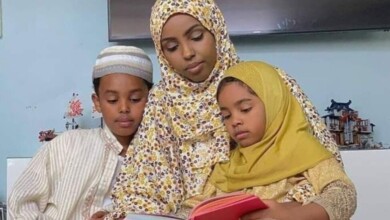
Every child has a story
By Janat Yahaya Naggolola
Sometimes what looks like a behaviour problem is simply a story waiting to be understood.
Sit in a room full of young people and you will notice it within minutes.
One walks in laughing loudly, talking to everyone, apparently carefree. Another settles at the back, avoids eye contact and says very little. One is eager to answer every question. Another seems restless, distracted, difficult to reach.
From the outside, they look like different personalities. But children are rarely only what we see.
Behind the laughter may be insecurity.
Behind the silence may be fear.
Behind the confidence may be a deep need for approval.
Behind the anger may be hurt.
Behind the constant need for attention may be a child quietly asking, “Do I matter?”
And sometimes there is no crisis at all. There is only a young person trying to work out who they are, where they belong and who they are becoming. Every child deserves to be known, not merely managed.
THE CONVENIENCE OF LABELS
It is easy to describe a child by what they do. She is stubborn. He is careless. She is too sensitive. He is difficult.
Labels are convenient because they close the matter quickly. They give us an explanation without ever giving us an understanding.
A child who keeps forgetting assignments may need accountability, and may equally need structure, organisation and confidence. A teenager who withdraws from family conversations may appear disrespectful while actually carrying something they have no language for. A child who reacts sharply to correction may have learned, somewhere along the way, that correction is unsafe.
None of this excuses poor behaviour. It simply invites us to become curious before we become judgmental. When we understand the story, we can address the behaviour and still respond to the need.
A DEEPER LENS
Every tradition of wisdom worth its name has warned us against reading people from the surface.
We are taught that every child enters this world upon fitrah, a pure and upright natural disposition, and that it is the surrounding environment, the household, the school and the wider community, that shapes what that child eventually becomes.
The Qur’an describes this disposition as the very pattern upon which humanity was created (Surah ar Rum 30:30).
The implication for every parent and educator is direct. The child is not the problem. The environment we build around the child is doing far more work than we realise.
We are also reminded that judgement by appearance is the shallowest form of judgement.
In a well-known narration, the Prophet (SAW), taught that Allah does not look at our outward forms or our wealth, but at our hearts and our deeds (Sahih Muslim). If the Divine gaze rests on the heart, our own gaze cannot responsibly stop at behaviour.
Place those two ideas side by side and a philosophy of raising children emerges. The child arrives whole. What we build around that child does the shaping. And the measure of any of us was never the surface anyway.
Which means the adult in the room carries the heavier responsibility. Not to manage a personality, but to tend a heart that is still forming.
CHILDREN ARE BECOMING WHILE WE ARE CORRECTING
We frequently expect emotional maturity from children who are still learning what their emotions mean. We expect articulate communication from young people who do not yet have the vocabulary. We expect resilience while forgetting that resilience itself must be developed.
A child does not only need to be told what to stop doing. They need adults who help them understand why they do what they do, what their choices cost and who they are becoming through those choices.
BETTER QUESTIONS
Instead of asking “Why is this child behaving like this?”, ask “What is this behaviour communicating?”
Instead of “Why can’t they just listen?”, ask “Have I created enough safety for this child to speak?”
Instead of “What is wrong with them?”, ask “What might they be struggling to carry?”
These questions remove nothing. They make our boundaries more intelligent, more compassionate and more effective.
FOR EVERY ADULT WHO SHAPES A CHILD
Listen beyond the words. Observe beyond the behaviour. Correct without humiliating. Set boundaries without withdrawing warmth. Praise effort and character, not only results. Allow mistakes without allowing a child to believe that the mistake defines them.
Above all, let a child experience the rare and powerful feeling of being genuinely seen.
Because sometimes a child does not need another speech. They need someone to sit beside them and say, “I see you. Tell me what is happening.”
So, the next time a child tests your patience, pause before you respond. There may still be a consequence. There may still be a boundary. There may still be a lesson. But first, become curious.
What story is this child carrying?
We cannot meaningfully shape what we have never taken the time to understand.
PS
This is precisely the work we do.
At MYNDPATH Institute of Character and Capacity Development, we partner with schools, families and organisations to build character deliberately rather than accidentally, through learner sessions, parent engagements, teacher training and structured mentorship. Our focus is self-awareness, responsibility, empathy, integrity, emotional intelligence and resilience.