Health ministry deploys medical interns amid allowance dispute
By Shahista Namale
“The Uganda Medical Internship Committee (UMIC) Secretariat has completed the placement of medical interns for the internship period running from August 3, 2026, to July 31, 2027,” reads a notice to hospital administrators signed by Dr Daniel Kyabayinze, Director of Public Health, on behalf of the Director General of Health Services at the Ministry of Health.
Dr Kyabayinze said the placement covers all eligible interns submitted by the respective professional councils.
“The attached list indicates the medical interns placed at your respective hospitals for your information and necessary action,” he said.
The Ministry directed hospital administrators to ensure internship programmes begin on schedule, conduct induction and orientation sessions before interns assume clinical duties, and submit lists of those who report for duty by August 14, 2026.
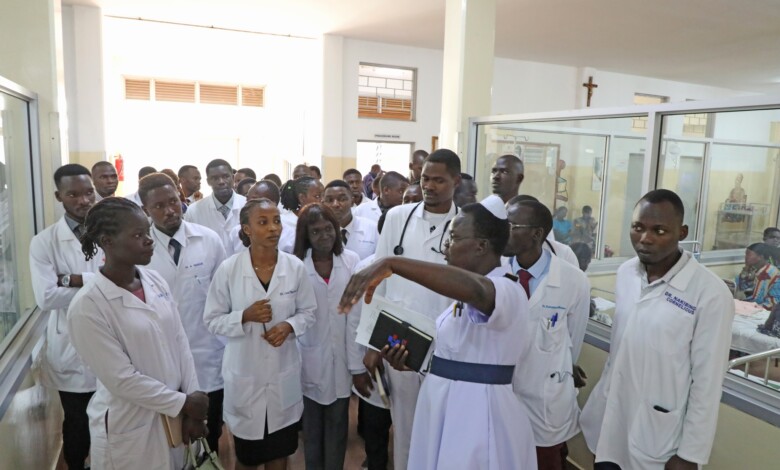
According to the Uganda Medical Association (UMA), medical interns are graduates who have completed their medical degrees and must undertake a supervised internship before obtaining full practising licences.
The deployment comes amid growing concern over proposed changes to government policy on interns’ allowances.
The President of the Federation of Uganda Medical Interns (FUMI), Dr Silver Ssegonga, said pre-interns continue to face uncertainty and urged the Ministry of Health to address their concerns.
“Medical interns are qualified doctors, not students,” he said. “We want all eligible pre-interns deployed to help address staffing shortages in public health facilities.”
He also called for the timely payment of interns’ allowances and the withdrawal of the NETH policy, arguing that it disadvantages young health professionals.
“We have written to the relevant authorities but have not received a response. We urge the government to engage stakeholders, including UMA and FUMI, before implementing changes that affect medical interns,” he said.
A current medical intern, Namutebi Florence, said the proposed policy could undermine healthcare delivery by making it difficult for newly deployed doctors, nurses, pharmacists and dental surgeons to report to their duty stations.
“How does the Ministry expect young health workers to reach their deployment sites without adequate facilitation?” she asked.
Dr Frank Asiimwe, President of the Uganda Medical Association, criticised what he described as inadequate consultation with professional bodies on internship reforms.
“Let there be meaningful consultation and consensus. We should strengthen the existing system rather than introduce changes that create uncertainty,” he said.
Dr Asiimwe said interns are indispensable to public hospitals, where they often work long hours in emergency, maternity and surgical units while facing occupational risks, including exposure to infectious diseases.
“These interns stand between life and death every day. We cannot expect them to respond to outbreaks such as Ebola without proper facilitation,” he said.
He added that government should continue meeting its obligation to pay interns, arguing that they provide essential frontline services and are critical to the country’s healthcare system.