How Utbah ibn Ghazwan swapped the battlefield for a tent in Basra
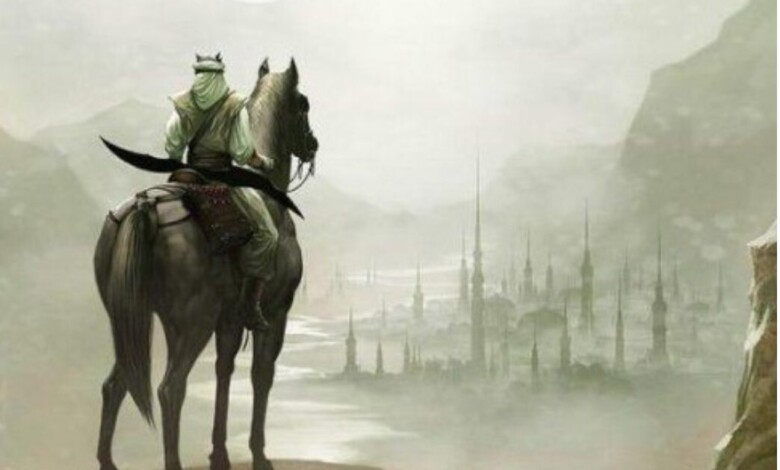
Utbah ibn Ghazwan ibn Jabir ibn Wahib (c. 581–639 CE / 17 AH), widely known by his kunya Abu Ghazwan al-Mazini, was a foundational figure in early Islamic history. A member of the Banu Mazin clan and an ally (halif) of the Banu Nawfal of the Quraysh, he was a distinguished warrior, an exceptional archer, and a close companion (Sahabi) of the Prophet Muhammad. Beyond his military exploits, he is remembered as the structural founder and first governor of Basra, one of Iraq’s most historically significant cities.
EARLY CONVERSION
Utbah was among the vanguard of Islam, famously counting himself as “the seventh of seven” people to embrace the faith. Standing firm in the terrifying early days of the Makkan call, he weathered the physical and social retaliation of the Quraysh.
His devotion was marked by a deep attachment to the Prophet; though he successfully fled to Abyssinia for safety, his longing for the Prophet drew him back across the sea to Makkah, risking his life until the general migration to Madinah became possible.
Physically, Utbah was described as an imposing, tall, and handsome man (Tawilan Jameelan) with a striking presence.
THE CONQUEST OF AL-UBULLAH
During the caliphate of Umar ibn al-Khattab, the Muslim forces faced stiff resistance from Sasanian Persian reinforcements along the lower Tigris. Looking for a commander who was spiritually grounded yet militarily brilliant, Umar called upon Utbah, handing him a modest force ranging from a few hundred to 2,000 men. Umar’s directive was clear:
“Go with your men to the furthest Arab lands and the nearest non-Arab lands. Proceed with Allah’s blessing. Call to Allah; whoever responds, accept him. Whoever refuses, offer them to pay jizya. If they refuse, fight them without leniency.”
Faced with a heavily fortified Persian cavalry garrison at al-Ubullah, Utbah relied on clever psychological warfare. He had flags mounted on spears and ordered the women accompanying the camp to march behind the army, raising an enormous cloud of dust. Believing a massive reinforcement wave had arrived, the Persian garrison panicked, evacuated to boats anchored on the river, and abandoned the city. Utbah entered the strategic prize without losing a single man.
GOVERNOR OF BASRA AND DEVOTION TO ASCETICISM
Following his victories, Utbah noticed that many within his ranks were quickly growing accustomed to the luxurious lifestyles and wealth of the fertile Mesopotamian lands. Fearing this would soften their spiritual resolve, he sought and received permission from Caliph Umar to design a new garrison town: Basra.
Utbah laid out the city plans and constructed its central assembly mosque out of simple reeds. Yet, despite overseeing vast wealth as governor, he refused to build a palace or house for himself, remaining in his simple cloth tent.
FINAL DAYS AND ANSWERED PRAYER
Utbah never coveted administrative power and felt deeply uncomfortable with the political friction of governance, particularly after feeling undermined by surrounding regional leadership like Saad ibn Abi Waqqas.
In 17 AH, after appointing a deputy over Basra, Utbah traveled to the Hijaz to perform the Hajj pilgrimage. He then went directly to Madinah to beg Caliph Umar to permanently relieve him of his gubernatorial duties. Umar, who valued leaders untouched by greed, refused outright, stating: “You place your heavy trusts on my neck, then leave me alone? No, by Allah, I will not excuse you.”
Bound by his duty to obey the Caliph, Utbah prepared to return. Before mounting his camel, he turned toward the Qiblah, raised his hands, and prayed to God to ensure he would never have to return to Basra or take up the reins of governance again. His prayer was answered.
On the road back to Iraq, he suffered a fatal fall from his mount and died at the age of 57, leaving behind a legacy of absolute humility at the height of imperial power.