HZW joins global Islamic social finance forum in Sokoto
By Our Reporter
House of Zakat and Waqf Uganda (HZW) has strengthened its engagement with Islamic social finance institutions across Africa following its participation in an Islamic Development Bank (IsDB)-supported capacity-building programme in Sokoto State, Nigeria.
HZW Chief Executive Officer Dr Hamzah Namungo and Head of Mobilization Sheikh Yahaya Kalungi joined an international team of facilitators for the programme, which brought together key stakeholders in the Islamic social finance sector from at least nine countries.
The initiative focused on strengthening institutional capacity in Zakat and Waqf while providing a platform for participants to exchange knowledge, share best practices and explore more effective approaches to Islamic social finance.
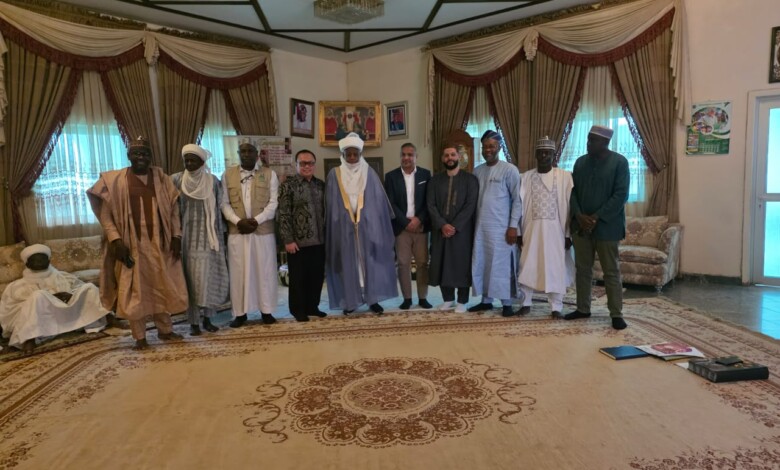
A major highlight of the engagement was a courtesy visit by the HZW delegation and other international speakers to the Sultan of Sokoto, Alhaji Muhammadu Sa’ad Abubakar III, at his palace.
The visit provided an opportunity to reflect on the longstanding links between Uganda and Nigeria in the development of Zakat and Waqf institutions.
Among the key social interventions highlighted by the HZW delegation was the 2022 Lodonga school project in Yumbe District, which was officiated by Eng. Muhammad Lawal Maidoki, chairman of the Sokoto Zakat and Waqf Commission.
“The project remains an example of practical cooperation in advancing Islamic social finance and community development,” Namungo said.
The Sokoto programme also enabled HZW officials to interact with leading international scholars and practitioners in the field, including Prof. Dr Irfan Syauqi Beik of IPB University, Indonesia, a recognised expert in Islamic economics and Islamic social finance.
“The engagements presented us with an opportunity to deepen professional networks and strengthen Uganda’s contribution to the development of effective Zakat and Waqf systems,” Namungo said.
He added that such cross-border exchanges are essential to building institutions capable of mobilising Islamic social finance resources transparently and efficiently for the benefit of communities.