UMSC directive on school land titles sparks controversy

By Our Reporter
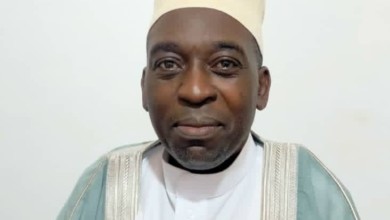
A war of words has erupted between Imam Iddi Kasozi and Uganda Muslim Supreme Council (UMSC) officials over a directive requiring Muslim-founded schools to obtain clearance from Old Kampala before processing land titles.
The directive has exposed tensions over UMSC’s authority over Muslim-owned schools, with Imam Kasozi arguing that the Council cannot claim control over institutions established and managed by other Muslim organisations.
Imam Kasozi questioned the basis of the directive, arguing that many Muslim-owned schools are not under UMSC and therefore should not be required to seek clearance from the Council.
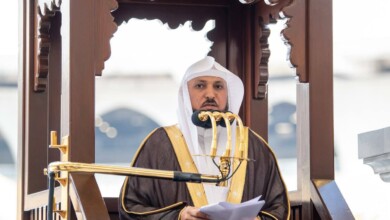
But Sheikh Juma Bakhit Cucu, UMSC Secretary for Education and Sports, hit back, accusing Imam Kasozi of being uninformed about the Council’s contribution to the education sector.
“Does he know that there are 1,386 primary schools? We had about 600 before Mufti Shaban Ramathan Mubaje came to office. Isn’t that development?” Bakhit told the media at the UMSC headquarters in Kampala.
“We had 60 secondary schools before, but now we have 350 secondary schools under UMSC. But is he aware of these facts? He’s not aware because he doesn’t want to come here and doesn’t want to understand what is good,” he added.
Imam Kasozi, however, rejected the criticism, accusing the UMSC leadership of incompetence and insisting that Muslim ownership does not automatically place a school under the Council.
“They mentioned my name 70 times in a 30-minute video recording, including accusing me of being misinformed and misinforming the public on the matter. But these are Muslim-owned schools. Not every Muslim-owned school is under UMSC. It is not true,” he insisted.
Imam Kasozi, a prominent Islamic scholar and activist and head of the Uganda Muslim Youth Assembly (UMYA), has maintained that Muslim communities and organisations should retain ownership and control of institutions they establish, rather than have them subjected to centralised bureaucratic control.
UMYA itself owns several schools but does not subscribe to UMSC authority.
The Uganda Muslim Education Association (UMEA) and other Muslim organisations also own and operate educational institutions, raising questions about whether the UMSC directive can legitimately apply to schools established by bodies outside the Council’s administrative structure.
The dispute follows Circular No. 8 of 2026, dated August 5, in which UMSC said it had observed some Muslim-founded schools acquiring land titles through local authorities without clearly indicating the foundation body behind the institutions.
The Council cited Arua Public Secondary School and Soroti Secondary School as examples where, according to UMSC, the Muslim identity was lost because of unclear ownership documentation.
Under the directive, titles for Muslim-founded schools should clearly indicate both the registered name of the school and UMSC as the foundation body. Schools must also obtain written approval from the respective Regional Assistant to the Mufti and UMSC headquarters before processing or obtaining land titles.
UMSC says the measures are intended to protect Muslim properties from future disputes, encroachment and loss of their Islamic identity.
But the emerging disagreement has shifted attention to a more fundamental question: Does UMSC have authority over every school founded or owned by Muslims, including those established by independent Muslim organisations that do not recognise its authority?
For Imam Kasozi and other critics, the answer is no. For UMSC, the directive is part of its responsibility to protect Muslim-founded institutions and their properties.