Al-Azhar: Love for Prophet Muhammad must be reflected in action

By Ahmed Idriss
Muslims should demonstrate their love for Prophet Muhammad by putting his teachings into practice and making his example part of their daily lives, the Secretary-General of the Al-Azhar Islamic Research Academy, Prof. Muhammad El-Gendy, has said.
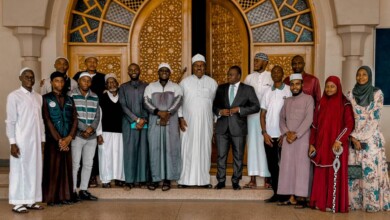
Prof. El-Gendy made the remarks during a commemoration of the birth of Prophet Muhammad held last Thursday in cooperation with Noble Quran Radio from Cairo under the theme, “Your Fragrant Biography… A Way of Life.” The event was held under the patronage of the Grand Imam of Al-Azhar, Prof. Ahmad At-Tayyeb, and brought together scholars, public figures and members of the public.
Addressing the gathering, Prof. El-Gendy described the birth of Prophet Muhammad as the arrival of the Messenger whom Allah sent as a mercy to all creation.
He cited Allah’s words in the Quran: “We have not sent you, [O Muhammad], except as a mercy to the worlds” (Quran 21:107), saying the Prophet’s mercy was reflected in his words, actions and dealings with others.
He said the Prophet demonstrated this mercy through his care for the weak, orphans and people in need, as well as through forgiveness, kindness and generosity.
But Prof. El-Gendy stressed that remembering the Prophet’s life should not stop at expressions of love and admiration.
“The greatest way to commemorate his birth is to transform love for him into action, his guidance into conduct, and his message of mercy, gentleness, and benevolence into a way of life,” he said.
He illustrated the Prophet’s compassion with the account of a camel that complained to him about being mistreated by its owner. The Prophet, he said, instructed the owner to fear Allah concerning the animal.
For Prof. El-Gendy, the incident demonstrates that the Prophet’s mercy extended beyond human beings to animals and other creatures, making kindness and compassion principles to be practised rather than merely admired.
He urged Muslims to renew their connection with the Prophet by studying his biography, sending prayers and peace upon him, adopting his character and following his example in their everyday dealings.
He pointed to the words recited by Muslims during prayer—“Peace be upon you, O Prophet, and the mercy of Allah and His blessings”—as an expression of the Prophet’s enduring place in the faith and consciousness of Muslims.
The commemoration featured Quran recitations, devotional supplications and Prophetic praises, bringing scholars and attendees together in remembrance of the Messenger.