Not yet is not never

By Hatmah Nalugwa Ssekaya
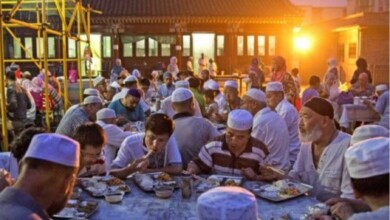
It happens at nearly every Nikkah/wedding. You are balancing a plate of rice, smiling at the couple across the hall, when an aunt or an uncle appears at your elbow and asks, with great warmth and no mercy, “So, when is it your turn?”
You smile and say something light. Then you go home, and at two in the morning you make the same du’a you have made for three years, in the same words, to the same ceiling.
If that is you, this column is for you. If it is not, it is for the aunt.
THE ACHE IS NOT A SIN
Wanting marriage is not weakness, ingratitude, or thin faith. The Quran speaks of spouses as a source of tranquility, with love and mercy placed between them (30:21). To long for that is to long for something good. And waiting hurts; pretending otherwise helps no one.
The Prophet Yaqub (A.S) shows what faithful sorrow looks like: “I only complain of my sorrow and grief to Allah” (12:86). He did not hide his pain. He took it to the One who could carry it. If your du’a is heavy, let it be heavy. It is still a du’a.
SINGLEHOOD IS NOT A VERDICT
Many of us carry a private theory for why we are still waiting. I am too much. I am not enough. I did something wrong. Please put it down. Being unmarried says nothing about your worth, your looks, or your standing with Allah. Marriage is not a prize for the deserving, and its absence is not a punishment. Otherwise we would have to explain why so many sincere men and women have waited long, or lived without a spouse.
Maryam (A.S) was chosen and purified by Allah (3:42), and her honor never depended on a husband.
HOLD “PERHAPS IT IS GOOD FOR YOU” GENTLY
“Perhaps you dislike a thing and it is good for you” (2:216) is true, but said too quickly it sounds like stop being sad. Let it be a hand on the shoulder. The Prophet (PBUH) taught that every affair of the believer is good: gratitude in ease, patience in hardship (Sahih Muslim). The hadith does not deny that hardship is hard. It says nothing in it is wasted.
In the waiting room we start to live as if real life begins when someone walks in, postponing the course, the move, the friendships, the generosity. But today’s prayer counts. So do today’s kindness, the knowledge you gain, the parents you care for, and the work you do well.
Khadijah (may Allah be pleased with her) was a respected, capable businesswoman before she married the Prophet (PBUH). Her marriage enriched a full life. It did not complete an empty one.
WHAT THE COMMUNITY OWES THE ONE WHO WAITS
The Quran tells the community, “And marry off the single among you” (24:32). The duty is shared, yet the burden usually lands on the person waiting, who is questioned and compared. Instead:
- Make introductions sincerely, not as gossip.
- Ease unrealistic checklists of degrees, income, and family background.
- Resist extravagant weddings and inflated demands.
- Replace “When is it your turn?” with “I am making du’a for you.”
TIE YOUR CAMEL AND TRUST ALLAH.
Keep making du’a, knowing that Allah is too generous to turn back the empty hands raised to Him (Abu Dawud, Tirmidhi). Tell trusted family and friends you are open to introductions. Be firm about what truly matters and flexible about what does not. And look after your heart: turning to a friend, mentor, or counselor when loneliness weighs in is wisdom, not weak tawakkul.
The pressure is not the same for everyone. A woman may feel the clock; a man may feel the weight of provision and pride. Some are widowed or divorced and carry a different loneliness. This column ranks no one’s pain.
NOT YET IS NOT NEVER
We cannot promise how your story ends, because only Allah knows. But you are seen, your du’a is heard, your worth never rested on a ring, and a life lived well in the waiting is not wasted.
So the next time someone asks, answer calmly: “In sha Allah. In the meantime, I am living.”
May Allah grant every waiting heart peace today, and good in whatever comes next. Ameen.