Runyakitara Da’awa Agency hails veil directive

By Issa Kigongo
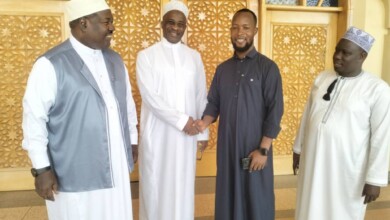
The Runyakitara Da’awa Agency has welcomed the government’s decision to allow female Muslim trainees in health training institutions to wear plain white veils as part of their uniforms, describing it as a step towards religious freedom, dignity and inclusion.
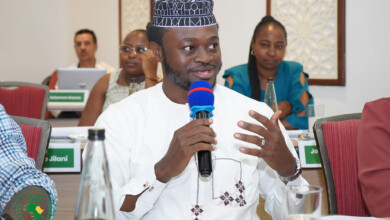
The agency’s president, Imam Matsiko Yahya MwineKaruuza, said the Ministry of Education and Sports directive shows that religious observance can coexist with professional standards.
The directive, issued on August 6, allows female Muslim trainees to wear plain white veils covering the head, ears and neck, provided they are neatly tucked into the uniform collar. It also requires trainees to comply with infection prevention and control, security and assessment requirements.
“This is a reasonable accommodation. It reconciles religious freedom with professional standards, patient safety and the public interest,” Matsiko said.
He said the issue had been a concern among Muslim female students for years, particularly those pursuing health-related courses.
Matsiko said that between 2014 and 2017, he received complaints from Muslim students in the Runyakitara region who said they had been required to remove their veils.
“For a Muslim woman, the hijab is not fashion. It is an act of worship and obedience to Allah,” he said, citing Qur’an 24:31.
He said he chose dialogue rather than confrontation, meeting students, lecturers and administrators to seek solutions.
“I chose engagement over protest. I returned to lecture halls and met students, lecturers and administrators directly. The goal was mutual understanding and lawful solutions, not to undermine authority,” he said.
According to Matsiko, the absence of a clear national framework previously left institutions and students uncertain about how to handle religious head coverings. He said the new directive provides much-needed clarity.
He stressed, however, that the directive does not exempt Muslim trainees from institutional rules.
“Religious freedom does not mean freedom from all rules. Equally, institutional rules should not unnecessarily block sincere religious observance where safe accommodation is possible,” he said.
He urged Muslim trainees to use the opportunity responsibly by combining their religious identity with academic excellence, discipline and professional competence.
“Let your conduct show that Islamic faith is not an obstacle to excellence,” he said.
The agency said it would continue engaging educational institutions, health facilities, the Uganda Muslim Supreme Council, regulatory bodies and government agencies to support fair implementation of the guidelines.
Matsiko also linked the decision to Uganda’s national motto, For God and My Country, saying religious commitment and responsible citizenship should not be treated as competing values.
“A Ugandan Muslim woman can be a servant of Allah, a disciplined student, a competent health professional and a loyal citizen at the same time,” he said.