Uganda drives halal regional hub strategy
By Abu Ssettumba
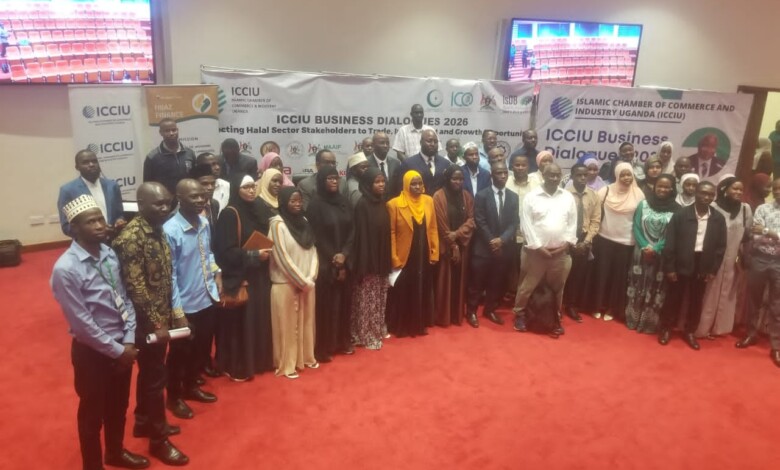
The Islamic Chamber of Commerce and Industry Uganda (ICCIU) has launched the ICCIU Business Dialogue 2026, unveiling a roadmap to transform Uganda into a premier regional hub for the multi-trillion-dollar global halal economy.
The initiative serves as a strategic runway for the upcoming Regional Islamic Trade and Halal Conference scheduled for October 6–7, 2026.
Speaking at the launch, ICCIU Secretary General Mwalimu Kigonya Elias Mwanawani emphasised that the modern halal ecosystem has expanded far beyond traditional dietary laws, emerging as a massive driver of ethical trade, finance, and manufacturing.
The dialogue series—running through July, August, and September—aims to dismantle the misconception that halal trade is a niche market reserved exclusively for Muslim consumers. Instead, the chamber is positioning it as a values-driven framework centering on transparency, integrity, and shared prosperity that benefits all of society.
“The halal economy has evolved far beyond food. Today it encompasses finance, pharmaceuticals, cosmetics, tourism, logistics, manufacturing and many other sectors. It is one of the fastest-growing economic sectors in the world, valued in trillions of dollars, presenting enormous opportunities for Uganda’s businesses, investors and exporters,” Mwanawani said.
By aligning Islamic commercial ethics with commercial law, the ICCIU plans to leverage Uganda’s strategic position as the host of the Islamic Development Bank (IsDB) Regional Hub to serve the wider East African Community (EAC), COMESA, and SADC markets.
BUILDING ON LEGISLATIVE FOUNDATIONS
Uganda’s push into the ethical market is backed by a decade of regulatory groundwork. Since the enactment of the Islamic Finance Act in 2016, the country has seen a steady rollout of specialized financial and standards infrastructure. These include the successful operational launch of Salaam Bank Uganda in 2024, alongside the introduction of Tamim Takaful Insurance this year; ongoing development of sovereign and corporate Sukuk (Islamic bonds) under the Capital Markets Authority, backed by technical support from the IsDB as well as the establishment of the region’s very first specialized halal laboratory testing facility at the Islamic University in Uganda (IUIU).
Mwanawani noted that these structural achievements prove the domestic ecosystem is maturing.
However, he maintained that capitalizing on this momentum requires immediate, synchronized action across both public and private sectors.
GULF INVESTMENT MISSION
To bridge the gap between local enterprise and international capital, the ICCIU announced an upcoming high-level trade and investment mission to the Gulf Cooperation Council (GCC) region and the Levant.
Starting August 8, 2026, a Ugandan delegation will travel to Qatar, Saudi Arabia, Jordan, and the United Arab Emirates to benchmark international best practices, court foreign direct investment, and secure direct export pathways for Ugandan commodities.
The upcoming monthly dialogues will focus squarely on expanding market access, navigating interest-free Islamic financing instruments, and tightening the local regulatory framework to protect businesses from fraud and commercial exploitation.
The chamber is executing these frameworks through a multi-sector coalition, working in tandem with the Uganda Investment Authority (UIA), Kampala Capital City Authority (KCCA), and relevant ministries to ensure wide economic inclusivity.