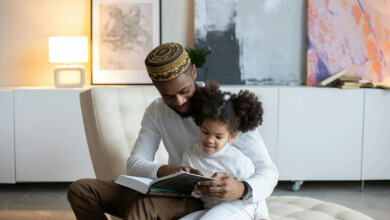
When a child keeps asking “why,” look closer
By Janat Yahaya Naggolola
Have you ever had a child who keeps asking:
“Why?”
Why does the moon change shape?
Why does this happen before that?
Why can’t we do it differently?
Why does this answer make sense?
By the tenth question, an exhausted adult often responds, “Because I said so.” And the conversation ends.
But what if, behind those endless questions, there is something worth protecting? What if your child is developing a powerful way of understanding the world?
THE HIDDEN SIDE OF INTELLIGENCE
When we talk about intelligence, we often think of examination marks, mathematics grades, memorised facts or a place among the top performers in class. Yet children show intelligence in many different ways.
Some naturally notice patterns, sequences, relationships, numbers, and causes and effects. They love puzzles, experiments, sorting, building, comparing, calculating and figuring out how things work. This is commonly described as logical-mathematical intelligence.
Importantly, it is not the same as being “good at mathematics.” It is the ability to reason, spot patterns, analyse information, solve problems and make connections. A child may struggle with a particular maths topic yet show remarkable logic when building something, organising objects, playing strategy games or troubleshooting technology.
That is why adults need to look beyond the report card.
WHAT PARENTS AND CAREGIVERS CAN DO
- Watch what naturally attracts your child. Does your child enjoy puzzles, construction, experiments, patterns, strategy games or working out how things function? These interests offer clues about how their mind naturally operates.
- Do not silence curiosity simply because you are busy. “Why?” can be exhausting when repeated all day, but curiosity is the beginning of discovery. Instead of “Because I said so,” try asking, “What do you think?” You may be surprised by the reasoning behind the answer.
- Teach children to think, not only to answer. An examination rewards the correct answer, but life often presents problems with no answer at the back of the book. Children need chances to analyse situations, weigh alternatives, make decisions and learn from mistakes.
- Bring logic into ordinary family life. Cooking involves measurement. Shopping involves budgeting. Chores involve sequencing. Gardening involves observation. Simply asking, “How could we solve this problem?” turns an ordinary moment into a thinking opportunity.
- Avoid labelling children too quickly. The child who takes things apart may be called troublesome; the one who constantly questions, stubborn; the one who wants every detail, difficult. Often, the behaviour that frustrates us is showing how that child’s mind is trying to make sense of the world.
- Let children experience productive mistakes. Logical thinking grows when a child tests an idea, finds it does not work, adjusts and tries again. If adults supply every answer immediately, children become dependent on answers rather than confident in searching for solutions.
- Connect intelligence with character. A sharp mind without integrity can be misused. Children must learn to ask not only “Can I solve this?” but also:
“Should I do this?” • “Who will this affect?” • “Is this fair?” • “Is this the right thing to do?”
That is where intelligence meets character.
WHAT DOES ISLAM TEACH US ABOUT THINKING?
Islam does not encourage people to move through life without reflection. The Qur’an repeatedly invites us to observe, consider and think deeply about creation. Allah says:
“Indeed, in the creation of the heavens and the earth and the alternation of the night and day are signs for those of understanding.” — Qur’an 3:190
This verse reminds us that observation is never meaningless. The world around us constantly invites us to notice, question and reflect, and the Qur’an repeatedly asks us to reason rather than follow without understanding.
This gives parents a valuable opportunity: to nurture a child’s curiosity while guiding it towards purpose, responsibility and recognition of Allah’s creation.
- A child looking at the stars can learn about patterns in the sky.
- A child planting a seed can observe growth and change.
- A child asking how the human body works can discover the complexity of creation.
Alongside the scientific question, we can nurture gratitude, humility and wonder by gently saying, “Look at how Allah created this.” The goal is not to replace knowledge with religious language, but to help children see that knowledge should lead to humility, responsibility and purposeful action.
So, intelligence should not be measured only by how many questions a child can answer. We should also ask: How well can this child think?
The author can be contacted on +256 772 858 289