Al-Azhar scholar urges Muslims to avoid seeking worldly gain through religion
By Ahmed Idriss
Muslims have been urged to strengthen their relationship with the Holy Qur’an and uphold its teachings with sincerity, warning that religious knowledge should never be used as a means of pursuing worldly interests.
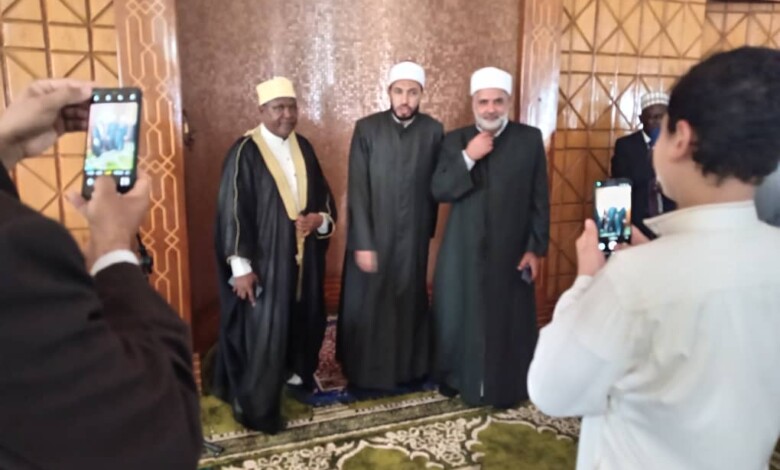
Delivering the Friday Khutbah at Gaddafi National Mosque in Old Kampala on June 6, 2026, Dr. Badr Abdelrahman Ahmed Farid Mohammed, the Head of Dawah Programs at Al-Azhar University, described the Qur’an as a source of guidance, blessings and eternal success for those who learn, recite and practice its teachings.
Basing his sermon on verses from Surah Fatir, Dr. Badr reminded worshippers that Allah promises immense rewards to those who maintain a close relationship with His Book.
Quoting the Qur’an, he said: “Indeed, those who recite the Book of Allah, establish prayer, and spend out of what We have provided for them, secretly and publicly, can expect a trade that will never perish. That He may give them in full their rewards and increase them of His bounty. Indeed, He is Forgiving and Appreciative.” (Qur’an 35:29-30).
”The Qur’an is a trade with Allah that never fails,” Dr. Badr said, explaining that believers who dedicate themselves to the Book of Allah receive rewards both in this life and in the Hereafter.
He added that Allah blesses such people by increasing goodness in their livelihoods, work and families.
”Allah rewards them in this world before the Hereafter and increases them from His bounty,” he said.
The Al-Azhar scholar also highlighted the special status accorded to those who memorize and preserve the Qur’an, citing the verse: “Then We caused to inherit the Book those We have chosen of Our servants.”(Qur’an 35:32).
He told the congregation that memorizers and students of the Qur’an are among those specially selected by Allah.
”Do not think that the bearer of the Qur’an is an ordinary person,” he said. “These are the people whom Allah has chosen from among His servants.”
However, Dr. Badr cautioned that this honour comes with immense responsibility, stressing that those entrusted with the Qur’an must embody its teachings and uphold its commands.
Referring to the continuation of the same verse, which describes three categories among those who inherit the Book — those who wrong themselves, those who are moderate and those who are foremost in good deeds — he urged Muslims to strive for excellence in worship and conduct.
The preacher warned against using religious knowledge to acquire wealth, influence or social status.
”Do not seek worldly gain through the Qur’an,” he said. “Allah has placed you as an imam, therefore do not seek through the Qur’an worldly benefits.”
He noted that some people may possess knowledge of the Qur’an yet fail to observe its limits and teachings, emphasizing that true honour lies in acting upon the guidance contained in the Book of Allah.
Dr. Badr encouraged believers to compete in righteous deeds, including prayer, charity, humility, remembrance of Allah, night worship and service to others.
He said those who excel in good deeds are among the people described by Allah as deserving of everlasting reward, citing the verse: “Gardens of perpetual residence; they will enter them, wherein they will be adorned with bracelets of gold and pearls, and their garments therein will be silk.” (Qur’an 35:33).
Calling for sincerity in all acts of worship, he urged Muslims to focus on seeking the pleasure of Allah and serving His religion rather than pursuing personal interests.
”We must take people by the hand and lead them to obedience of Allah,” he said.
Dr. Badr concluded by reminding worshippers that the mission of Muslims is to make people love the faith through good character and positive engagement with society, while remaining steadfast in devotion to Allah and commitment to the teachings of the Holy Qur’an.