IUIU alumni launch $1m campaign to support teachers
By Ahmed Idriss
The Islamic University in Uganda (IUIU) alumni association has launched a groundbreaking $1 million (Shs 3.7 billion) campaign to support teachers in Muslim-founded primary schools in obtaining formal degrees. This initiative comes in response to a policy that the government adopted in 2019, requiring teachers to obtain a university degree to teach in pre-primary and primary schools.
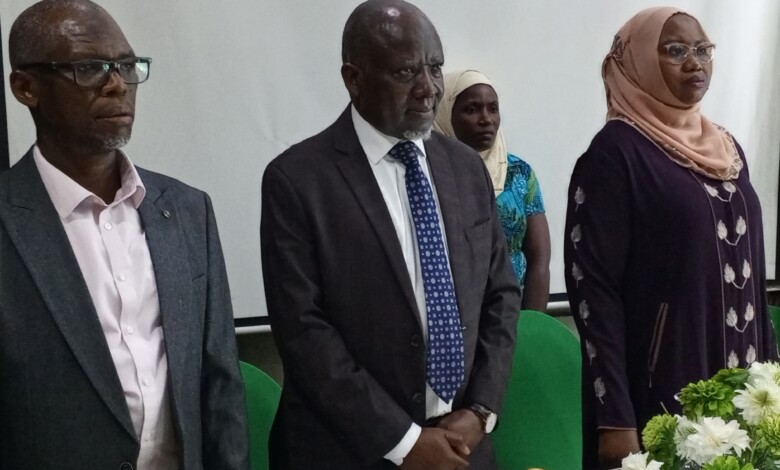
The initiative was announced by the IUIU rector, Prof Ismail Nsereko Gyagenda, during the sixth IUIU alumni dinner held on February 15 at Imperial Royale Hotel in Kampala.
“Together with the alumni association, we are launching a $1 million campaign to help train primary school teachers to earn degrees by 2030,” Prof Gyagenda said.
This policy granted all teachers—from nursery to primary school—a ten-year grace period to upgrade their qualifications to a bachelor’s degree to meet the new minimum requirements; otherwise, they would have to leave the profession.
Gyegenda stressed the urgency of addressing the lack of formal degrees among teachers at many Muslim-founded primary schools, a challenge that threatens the sustainability of these institutions.
“If our teachers do not have degrees, who will take over our schools?” Let us go bold and start this $1 million campaign to support our teachers because they don’t have the money to obtain the degrees. Let us not sit back and wait for others to come and do things for us,” Gyagenda said.
To kickstart the campaign, Gyegenda encouraged alumni to contribute $100 annually, with his initial donation setting the example.
Hajati Sharifa Buzeki, Executive Director of the Kampala Capital City Authority (KCCA), donated Shs 1 million towards the campaign, as she shared her vision for the university’s role in shaping future leaders. Drawing from her own experience at the Islamic University in Uganda (IUIU), Buzeki emphasised the power of alumni engagement and leadership.
“We need to be the guiders in empowering the next generation of leaders. Our strength is in numbers, and the potential within our alumni network is vast. We need to connect and invest in nurturing the leaders who will replace us,” Buzeki said.
Buzeki also highlighted the responsibility of alumni to support orphaned and vulnerable students. “Many orphans cannot get an education. We have a responsibility to pool resources and support their cause,” she added.
At the same event, Mousa Ssenkubuge, the IUIU alumni association’s executive secretary, unveiled plans to build an alumni village on a 50-acre piece of land.
“The alumni village will comprise a modern primary and secondary school, a health facility, and other essential social amenities. This is an investment in our future, a place where we can give back to our communities and support the next generation,” Ssenkubuge said.
Ssenkubuge called for unity and collective action to ensure the success of the project. “If we mobilise, we can achieve our goal. The only problem we have is that we have not been mobilising ourselves. I already have 50 people who are ready to invest in this project. So if we approach you, kindly support the project; it might not help you, but it may help your child,” Ssenkubuge said.