Sheikh Abdul Qadir Mbogo: The reformer of Uganda’s pulpit dies at 96
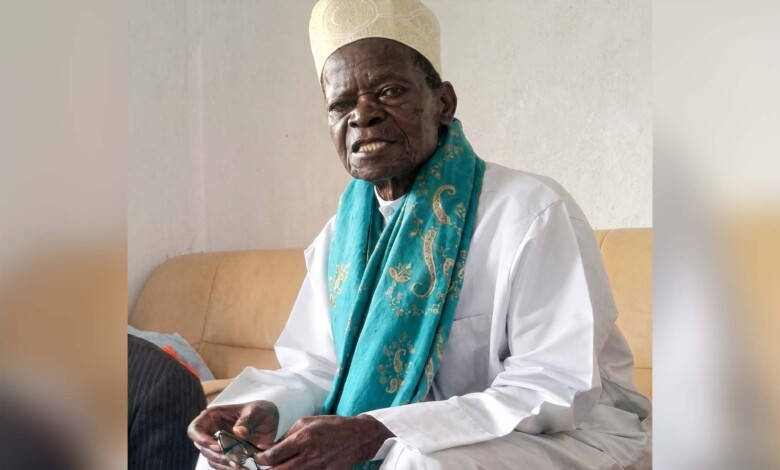
By Jafar Mugera
On a bright Friday afternoon in 1952, a soft-spoken young cleric ascended the pulpit of Kibuli Mosque to deliver the Jumu’ah sermon. Unlike many preachers of the time, he carried no written notes or collections of centuries-old Arabic sermons from which to read.
As he stood before the congregation, many worshippers wondered whether he would succeed. What followed, however, would mark a turning point in the history of Islamic preaching in Uganda.
With remarkable confidence and clarity, the young cleric delivered the khutbah in Luganda, a language understood by the majority of the worshippers. In doing so, he broke with a long-standing tradition of relying on imported sermons and pioneered a more accessible and relatable approach to Islamic preaching.
The congregation listened in amazement as the message of Islam came alive in their own language. That young preacher was Sheikh Abdul Qadri Mbogo, who would go on to become one of Uganda’s most influential Islamic scholars, educators, preachers and community leaders.
For decades thereafter, Sheikh Mbogo dedicated his life to advancing Islamic knowledge, nurturing future generations of Muslim leaders and championing the use of local languages in conveying the teachings of Islam.
Mbogo’s long and eventful journey came to an end on June 12, 2026. He was laid to rest the following day at his home in Kiwanga village, Mukono district, leaving behind a legacy that spanned more than seven decades of service to Islam.
Born on March 13, 1930, in Ntinda on the outskirts of Kampala, Mbogo was the son of Muwalimu Muslim Kyeswa. He received his early education at Wandegeya Primary School, located near Wandegeya Mosque.
It was during his school days that he dropped his birth name, Lamanzane (Ramathan), after enduring ridicule from fellow pupils. He later adopted the name Abdul Qadir, by which he would become known throughout Uganda and beyond.
Among his contemporaries at Wandegeya were renowned Qur’an reciter Sheikh Umar Ddumba and Sheikh Khalid Yunus Kinene. The trios came under the care of the late Hajji Musa Kasule, a philanthropist who not only paid their school fees but also provided for their basic needs.
After completing his early studies, Mbogo was placed under the tutelage of Sheikh Ali Bikula of Kasenene-Namasumbi in Mukono district, and later travelled to Yemen to pursue advanced theological studies.
His stay in Yemen was, however, cut short by a severe famine forcing him to return to Uganda in 1951. Upon his return, he was sent to Busoga for further religious instruction under Sheikh Ali Bakhit, an Arab scholar who was then teaching in eastern Uganda.
He later began a lifelong career in teaching and preaching. He first served as Imam of Abdul Aziz Bulwadda Mosque in Kasangati before his appointment as one of the Imams of Kibuli Mosque in 1952.
That same year, he married his first wife, the late Hajjat Sarah Natume. He later married Jamilah Najjuma, Mariam Nampijja, Zulaika Nalubega and Hawah Nalukenge.
Following the establishment of the Uganda Muslim Supreme Council (UMSC) in 1972, Mbogo was appointed the pioneer Kampala District Kadhi, a position he held until 2000 when he was succeeded by Sheikh Silman Kasule Ndirangwa. He returned to the office in 2009 after Ndirangwa joined a splinter group that established a parallel Muslim leadership at Kibuli amid disputes over the management of Muslim properties.
In 1974, President Idi Amin selected Mbogo among the first group of Muslim clerics to undergo management training at the Uganda Management and Advisory Centre to strengthen the administration of UMSC.
“President Amin believed that Muslim leaders needed managerial skills to run UMSC effectively, and Sheikh Mbogo was among the first beneficiaries,” Sheikh Jawad Mbogo, a son of the late cleric, told mourners during the burial ceremony on June 13.
The 2nd deputy Mufti, Sheikh Harunah Bukenya, described Mbogo as one of Uganda’s most respected Muslim clerics whose sermons, teachings and guidance shaped generations of Muslim leaders and faithful.
Beyond the pulpit, Mbogo played a key role in strengthening Muslim institutions, supporting the growth of Islamic education and healthcare services, and is remembered among those who contributed to the establishment of Kibuli Muslim Hospital.
A founding member of the Democratic Party, Mbogo commanded respect across political and religious divides for his humility, principled leadership and commitment to justice.